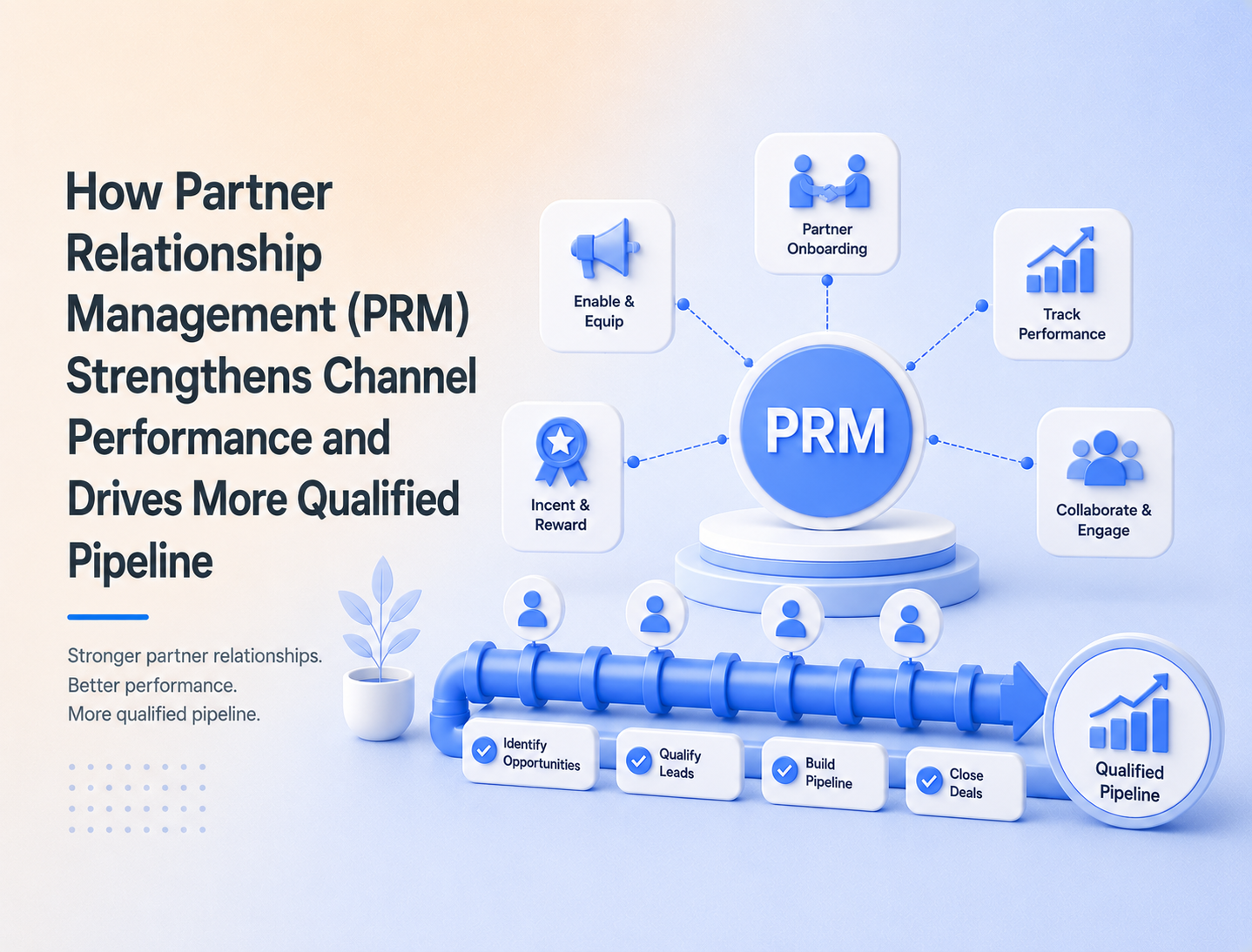
How Partner Relationship Management (PRM) Strengthens Channel Performance and Drives More Qualified Pipeline
Channel Marketing


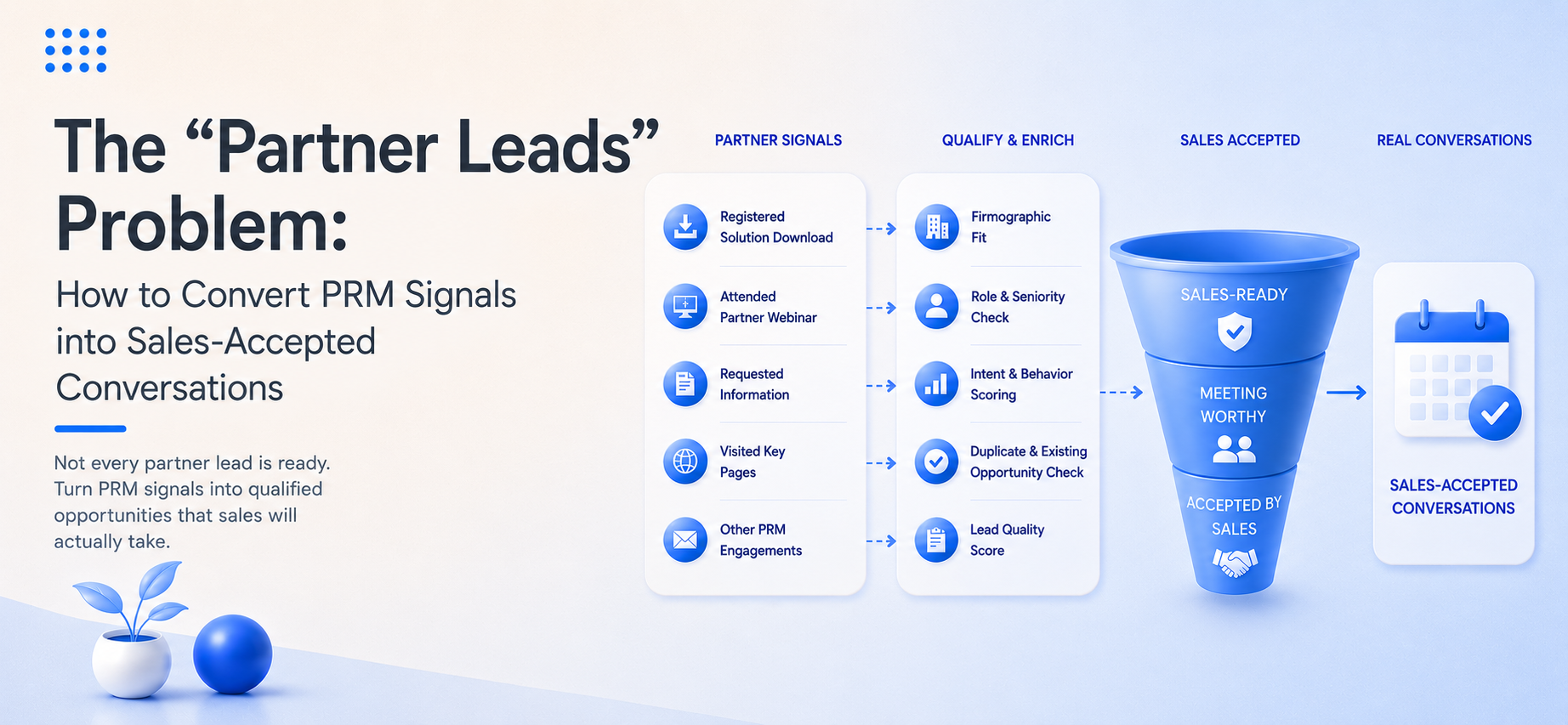
PRM is full of “signals,” but most never become sales-accepted conversations—because ownership is unclear, follow-up lags, and the buyer context is too thin. This framework shows how enterprise teams translate partner activity into director+ meetings that happen, with cleaner handoffs, tighter standards, and outcomes you can actually measure.
-
Channel Marketing
Introduction
Most enterprise partner teams don’t have a “partner problem.” They have a translation problem.
Your Partner Relationship Management (PRM) system is full of signals: deal registrations, portal activity, campaign clicks, training completions, event RSVPs, co-sell notes, “interested in” form fills. On paper, it looks like momentum.
Then the lead hits sales and… nothing happens.
No follow-up. No meeting. No second touch. No next step. Just a quiet drop into the same gray zone where “partner-sourced” gets labeled as “partner noise.”
If you’re a demand gen leader (or partner, channel, or field marketer) inside a technology company, you’ve likely seen the pattern: PRM creates a lot of activity data, but not enough sales-acceptable conversations. The gap isn’t your partner ecosystem. It’s the operational layer between signal and meeting.
This post breaks down what PRM signals really mean, why they so often fail to convert, and how enterprise teams build a system where PRM becomes a reliable input to Sales Accepted Leads (SALs) and director+ conversations that actually happen.
What Partner Relationship Management (PRM) Means for Demand Gen Leaders
At a practical level, PRM is supposed to do three things for revenue teams:
It organizes partner motion.
Partners need a home for enablement, MDF/Co-Op workflows, deal registration, co-selling steps, and campaign execution.
It records intent and engagement signals.
PRM captures partner-driven actions: which accounts are being targeted, who engaged, and what the partner claims is happening in the field.
It helps scale a channel program.
Without PRM, partner growth becomes a spreadsheet exercise and tribal knowledge. With PRM, you can standardize and expand.
So why do demand gen leaders still struggle to show pipeline from it?
Because PRM is often treated like a system of record, not a system of conversion.
A PRM signal is rarely a lead. It’s a hypothesis:
Turning that hypothesis into a Sales Accepted Conversation requires a bridge: fast follow-up, correct targeting, a clear ask, and proof that the meeting will be worth sales’ time.
Common Challenges Marketers Face
PRM signals are “soft” by default
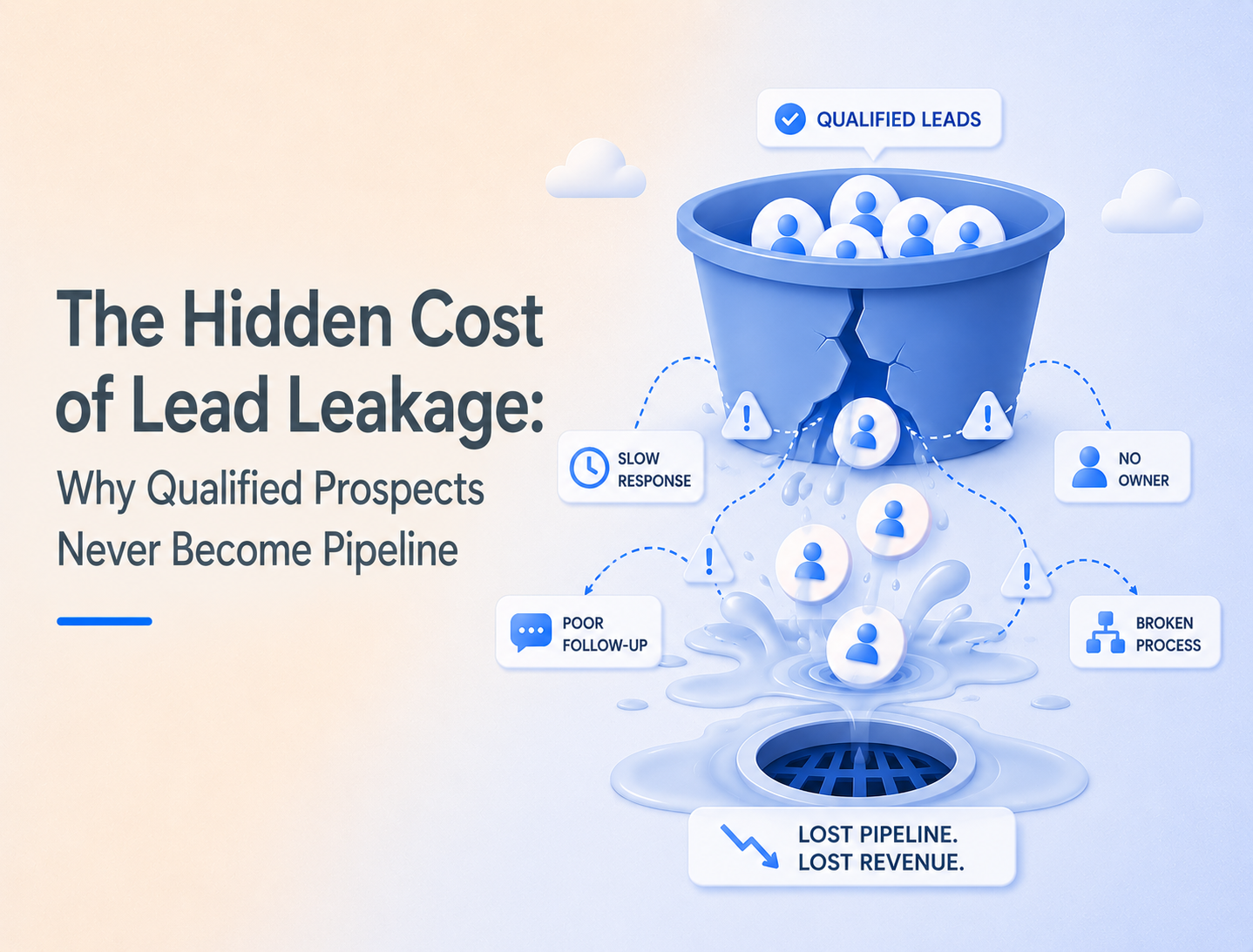
A portal visit or a campaign click doesn’t tell sales who the buyer is, what’s changing, or why a meeting makes sense now. Sales sees ambiguity and responds with caution.
Ownership gets messy fast
Partner leads tend to trigger questions nobody wants to answer mid-quarter:
Without a clear operating rule, the safest move becomes no move.
Follow-up is too slow for director+ attention
Senior stakeholders don’t stay “warm” for long—especially if they didn’t explicitly request a call. Process lag turns “partner interest” into silence.
Sales doesn’t trust the meeting quality
Many teams have been burned by “partner leads” that are:
Once that trust breaks, even good signals get ignored.
Your SDR team isn’t built to run partner motions at scale
Partner follow-up requires a different posture than inbound qualification or outbound prospecting. It’s multi-party, context-heavy, and often needs partner-friendly outreach. SDR bandwidth gets eaten quickly.



.png)

%201.png)


.png)


Solutions That Work
PRM can absolutely drive real pipeline—but only if you treat PRM as the front end of a conversion workflow, not the finish line.
Here’s what high-performing enterprise teams do differently, and where Site Ascend fits when you need scale without sacrificing quality.
Turn PRM “signals” into a real lead stage
Before sales ever sees a partner lead, define a conversion layer that answers:
This is where lead qualification matters—not as a checkbox, but as a filter that protects sales time.
Build partner-friendly outreach that still qualifies like sales needs
Partner leads can’t be handled like cold outbound, and they can’t be handled like passive inbound either.
The right approach is structured outreach that:
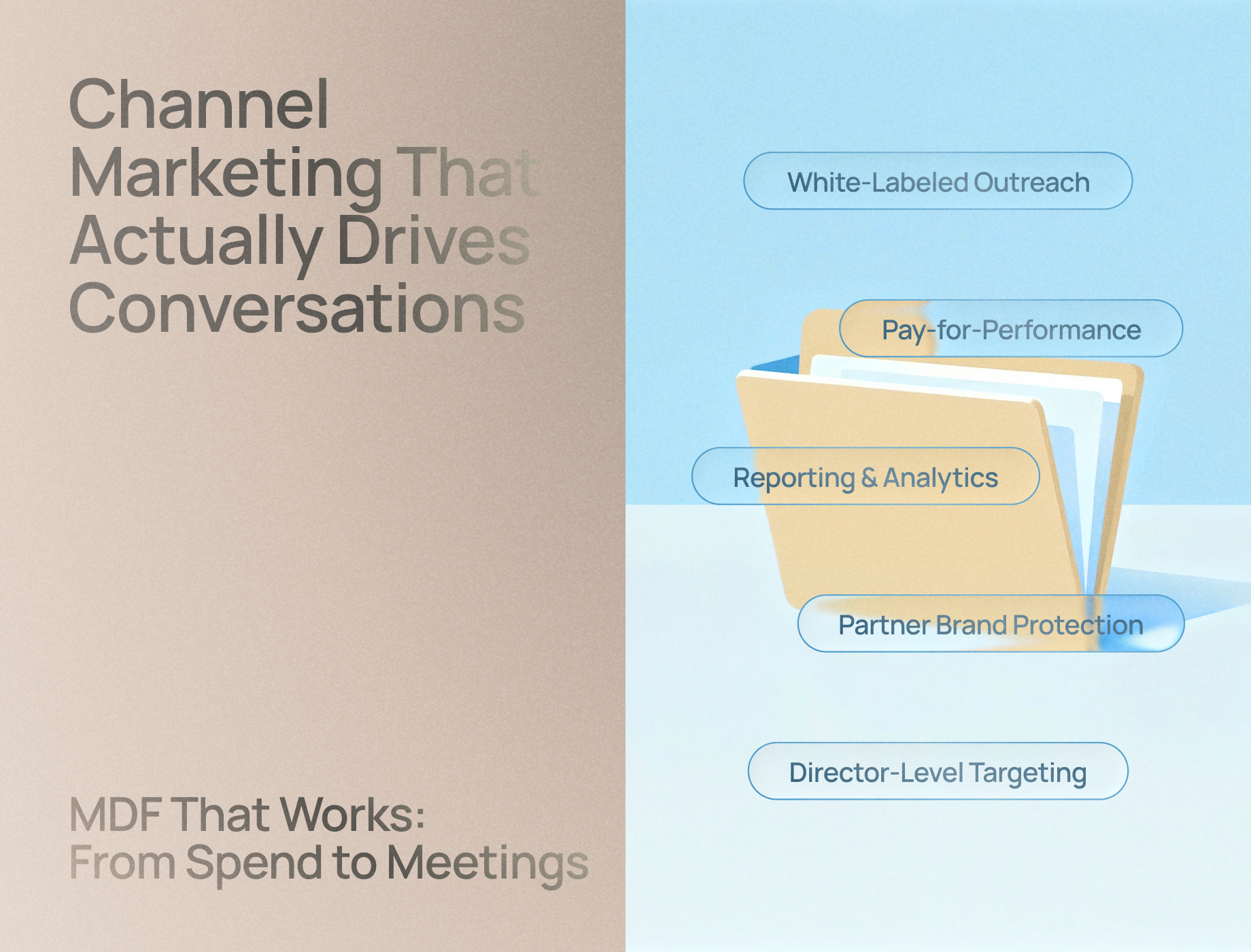
This is where white-labeled partner outreach becomes powerful. Site Ascend supports channel teams by running appointment-setting outreach on behalf of partners (often funded through MDF/Co-Op), while maintaining your brand and partner posture.
Move from “leads handed off” to “meetings that occur”
A lot of partner programs optimize for the wrong metric: how many leads were “generated.” But leads don’t create pipeline. Conversations do.
Site Ascend’s model focuses on paying for meetings that occur, which forces the motion to optimize for execution quality: targeting, acceptance criteria, confirmation, and show rate—not just volume.
Protect seniority standards (or your channel motion gets noisy)
If your partner lead follow-up isn’t explicitly designed to reach director+ stakeholders, it will drift down-market and down-seniority fast.
One of the simplest ways to preserve quality is enforcing a rule: director-level and above only for meetings. That clarity improves internal trust and creates cleaner attribution between partner motion and real revenue progression.
Instrument the process so you can see breakdowns in real time
Partner motions fail quietly. You need visibility into:
Real-time reporting turns partner pipeline into something you can manage—not something you apologize for.
Actionable Steps for Marketers
Use this checklist to operationalize PRM signals into Sales Accepted Conversations without overloading SDRs or frustrating partners.
The PRM-to-SAL Conversion Checklist
Define “signal tiers” in your PRM
Group signals into categories (high, medium, low intent) based on what actually correlates with meetings in your org.
Set a single ownership rule before the lead moves
Decide, in advance, what happens when a partner submits a lead:
What matters most is consistency.
Create a minimum data standard for “sales acceptance”
A partner lead shouldn’t hit sales without a clear set of fields that explain the opportunity context. Aim for clarity over completeness.
Route to director+ stakeholders by design
Build targeting rules that prioritize seniority, not just account match. If the lead is junior, treat it as discovery—not a meeting request.
Use an outreach motion that confirms reality, not just interest
Partner leads often sound like “they’re interested.” Your job is to confirm:
Decide your “meeting-worthy” outcomes
If sales is skeptical, define what a good first conversation looks like. Examples:
Measure “held meetings” as the primary outcome
Not leads created. Not activities logged. Not partner engagement. Meetings that occur—and what they lead to.
Comparison of Market Solutions
Most teams try to solve the “partner leads” problem in one of three ways. Each can work—but each has tradeoffs that matter at enterprise scale.
Option A: Keep it fully in-house (partner managers + SDRs)
This is the default approach: partner teams generate leads, SDRs follow up, and AEs decide what they’ll take.
Where it works
Where it breaks
Option B: Add more tools or automation inside the PRM
Many organizations try to solve the conversion gap by improving routing, notifications, scoring, and workflows.
Where it works
Where it breaks
Option C: Run a dedicated partner conversion motion (focused on meetings that occur)
This approach treats partner-sourced follow-up as its own revenue motion—designed to convert PRM signals into accepted conversations with clear standards.
Where it works
What to look for in this approach
For enterprise demand gen leaders, this is often the difference between “partner pipeline as a story” and “partner pipeline as a forecastable channel.”
Conclusion
PRM doesn’t fail because partner ecosystems don’t work. It fails because too many teams stop at the signal—and never build the conversion layer that turns that signal into a Sales Accepted Conversation.
If you want PRM to produce pipeline, treat it like any other revenue system: define standards, protect sales time, follow up fast, target director+ stakeholders intentionally, and measure outcomes that sales actually cares about.
If you want to pressure-test this approach in your partner motion, reach out to start a pilot with Site Ascend.
What’s the difference between a PRM signal and a partner lead?

Why do partner leads get ignored even when the account is in your ICP?
How can we scale partner follow-up without burning SDR time?


Start your pilot campaign today and explore the full range of Site Ascend's demand generation capabilities. Experience firsthand how we can enhance your efficiency, streamline your processes, and drive growth.
RELATED