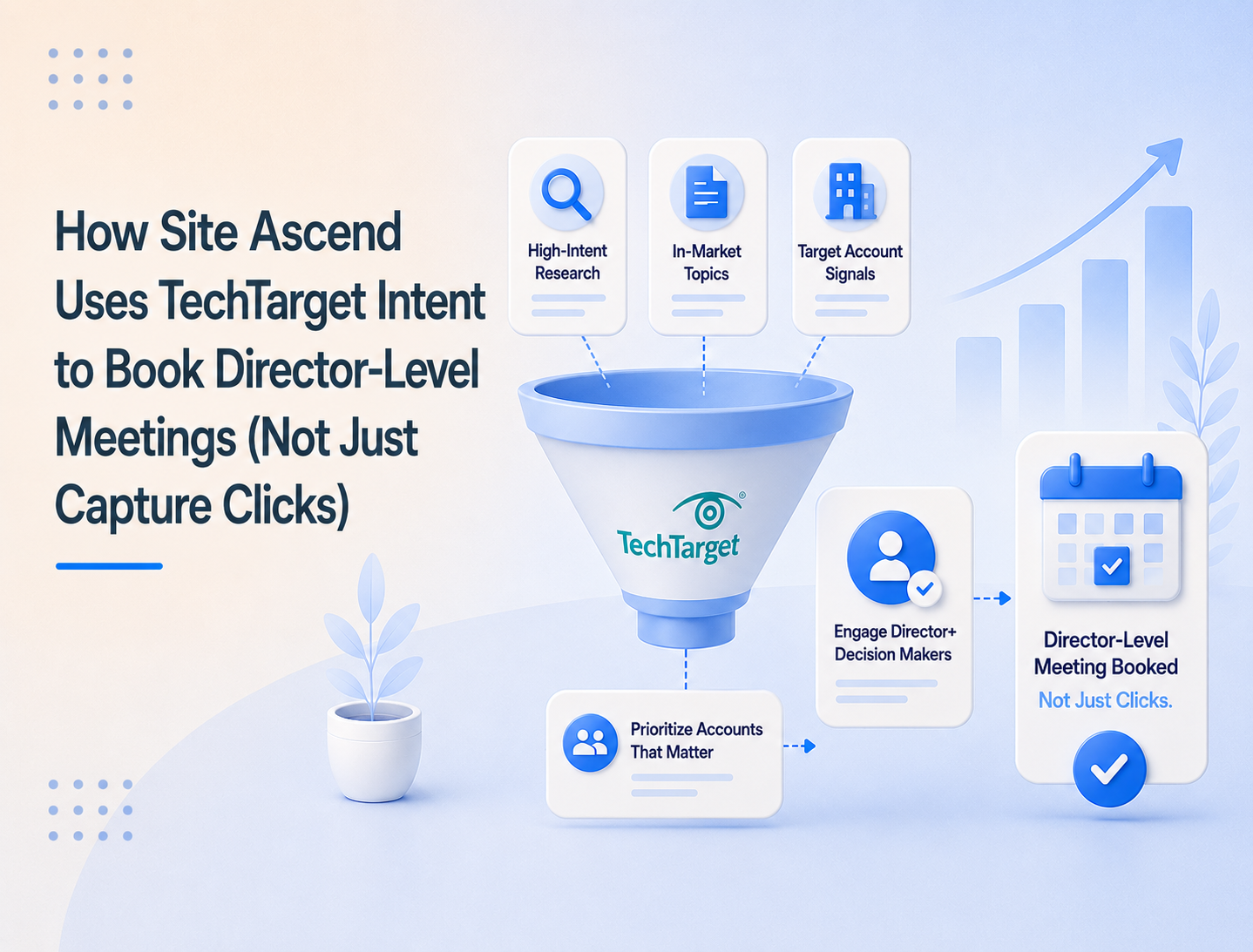
How Site Ascend Uses TechTarget Intent to Book Director-Level Meetings (Not Just Capture Clicks)
Intent Data & Account-Based Demand Generation


Account-Based Marketing remains one of the most effective ways to engage high-value accounts and accelerate enterprise pipeline. Learn how modern ABM strategies help B2B technology marketers align sales and marketing, engage buying committees, and generate more qualified opportunities.
-
Account-Based Marketing (ABM)
Introduction
Enterprise B2B buying has changed dramatically over the past decade. Purchasing decisions are now made by buying committees instead of individual stakeholders, sales cycles are longer, and competition for executive attention has never been greater. Despite these changes, many demand generation teams continue to measure success by lead volume rather than business impact.
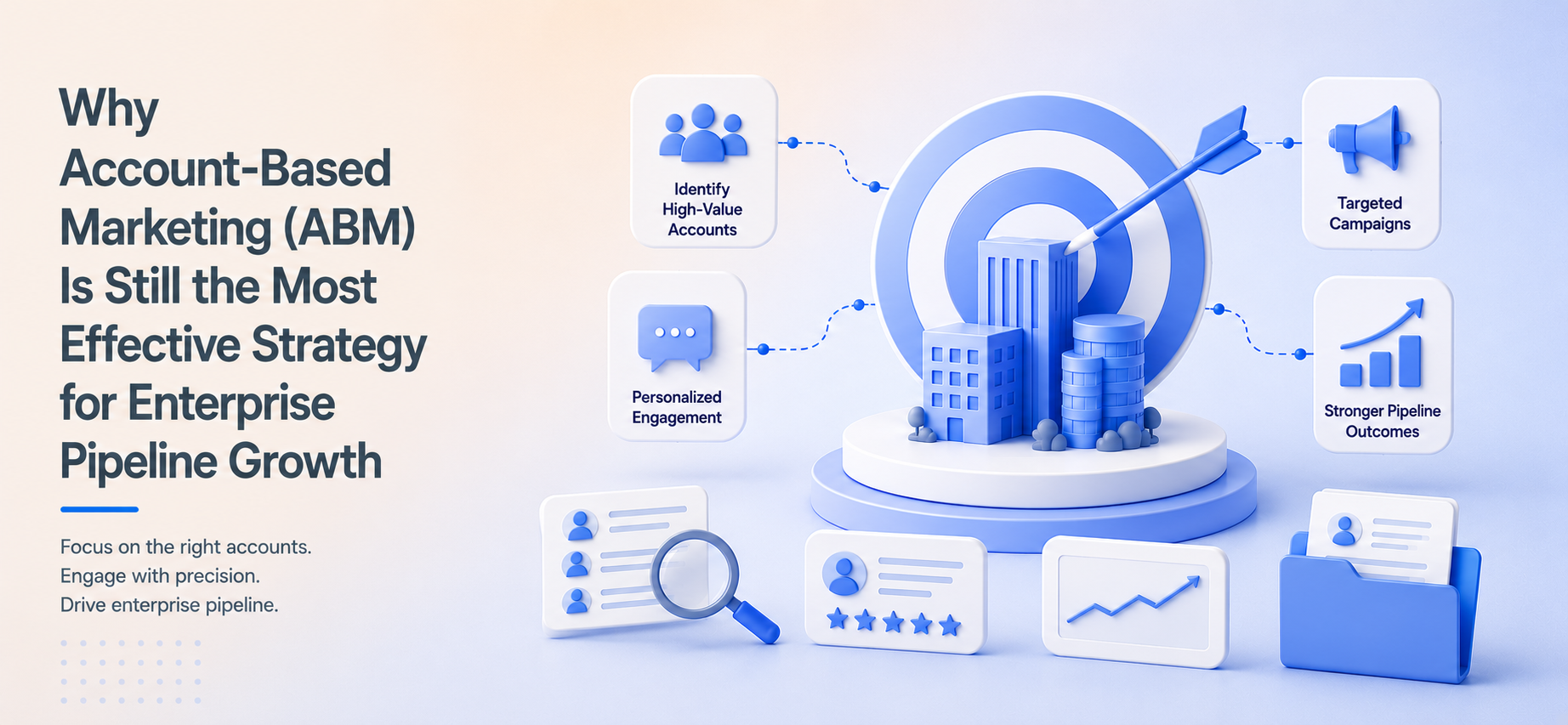
That's why Account-Based Marketing (ABM) remains one of the most effective demand generation strategies available. Rather than casting a wide net in hopes of generating enough leads, ABM focuses marketing and sales resources on the accounts most likely to become long-term customers.
For enterprise technology companies, the goal isn't simply reaching more prospects—it's building meaningful engagement within the right organizations, accelerating buying decisions, and creating more qualified pipeline.
What Account-Based Marketing (ABM) Means for Demand Generation Marketers
Account-Based Marketing is a strategic approach that aligns marketing and sales around a defined group of high-value target accounts. Instead of optimizing campaigns for lead quantity, ABM prioritizes account engagement, stakeholder influence, buying committee coverage, and revenue outcomes.
For demand generation teams, ABM changes how success is measured.
Rather than asking:
ABM asks:
This shift allows marketing organizations to invest resources where they have the greatest potential business impact.
Common Challenges Marketers Face
Although ABM has become widely adopted, many organizations struggle to realize its full value.
One common mistake is treating ABM as simply creating a list of target accounts. Without coordinated outreach, personalized engagement, and sales alignment, even well-defined account lists rarely produce meaningful pipeline.
Another challenge is engaging only one contact within an organization. Enterprise buying decisions often involve finance, IT, procurement, executive leadership, and end users. Focusing on a single champion can cause opportunities to stall when additional stakeholders enter the evaluation process.
Marketing and sales alignment also presents difficulties. If teams disagree on target account priorities, qualification criteria, or engagement strategies, campaigns lose momentum and resources are often wasted.
Finally, many organizations continue measuring ABM success using traditional marketing metrics such as impressions, clicks, or individual lead volume instead of account progression, executive engagement, and qualified opportunities.



.png)

%201.png)


.png)


Solutions That Work
Focus on Buying Committees Instead of Individual Leads
Enterprise purchases rarely depend on one decision-maker. Identify the key stakeholders involved in purchasing decisions and develop engagement strategies that reach technical evaluators, business leaders, financial decision-makers, and executive sponsors. Broader account coverage reduces dependency on a single contact and improves buying consensus.
Align Sales and Marketing Around Shared Account Priorities
ABM performs best when both teams agree on target accounts, qualification standards, messaging, and success metrics before campaigns begin. Shared planning reduces duplicated efforts, improves follow-up consistency, and creates a better experience for prospective buyers.
Measure Account Progression, Not Campaign Activity
Evaluate success by monitoring account engagement, buying committee participation, qualified meetings, sales conversations, opportunity creation, and pipeline progression. These metrics provide a more accurate picture of ABM performance than traditional marketing activity alone.
Personalize Engagement Throughout the Buying Journey
Enterprise buyers expect relevant communication at every stage of their decision process. Tailor messaging based on industry, business challenges, organizational priorities, and stakeholder roles to create more meaningful conversations and increase engagement across target accounts.
Where Site Ascend Fits
Executing ABM strategies requires consistent outreach and meaningful conversations with the right stakeholders. Site Ascend helps technology companies operationalize their ABM initiatives by supporting Executive Meetings with director-level and above decision-makers, Channel Marketing programs that extend partner-led account engagement, Event Marketing campaigns that drive targeted registrants, and Lead Qualification services that validate buyer interest before opportunities are passed to sales. These programs complement an organization's ABM strategy by helping convert account engagement into qualified pipeline.
Actionable Steps for Marketers
Conduct an ABM Readiness Assessment
Before expanding your ABM program, evaluate its maturity across five critical areas.
Target Account Selection
Are target accounts selected using revenue potential, strategic fit, buying intent, and market opportunity rather than company size alone?
Buying Committee Coverage
Have you identified and engaged multiple stakeholders across business, technical, financial, and executive functions?
Sales Alignment
Do marketing and sales share the same target account list, qualification standards, and account engagement plans?
Measurement Strategy
Are you tracking account progression, executive meetings, opportunity creation, and pipeline influence instead of individual lead volume?
Personalization Capability
Can campaigns adapt messaging to different industries, business priorities, and stakeholder roles throughout the buying journey?
Organizations that regularly review these areas often uncover opportunities to strengthen ABM performance before increasing investment.
Comparison of Market Solutions
Organizations adopt different approaches when implementing ABM, each with unique strengths and tradeoffs.
Some companies build fully internal ABM teams, giving them complete control over account selection, messaging, and campaign execution. While this approach offers flexibility, it often requires significant investments in personnel, technology, and ongoing coordination between marketing and sales.
Others rely heavily on ABM technology platforms that improve account identification, intent monitoring, advertising, and engagement tracking. These platforms provide valuable insights but still depend on strong operational execution to translate engagement into qualified sales opportunities.
Many organizations complement their internal capabilities with specialized execution partners that support account outreach, executive meeting generation, lead qualification, and partner engagement. This model allows internal teams to remain focused on strategic planning while extending execution capacity without substantially increasing headcount.
The strongest ABM programs typically combine strategic account planning, cross-functional alignment, technology, and disciplined execution to consistently move high-value accounts toward qualified pipeline.
Conclusion
Account-Based Marketing continues to deliver results because it reflects how enterprise buying decisions are actually made. Instead of pursuing maximum lead volume, ABM prioritizes meaningful engagement with the organizations that matter most.
Companies that align marketing and sales, engage entire buying committees, personalize account experiences, and measure pipeline progression rather than campaign activity are far more likely to build predictable enterprise revenue.
If your organization is looking to strengthen its ABM strategy and generate more qualified conversations with high-value accounts, contact Site Ascend.
Why is ABM more effective than traditional lead generation for enterprise companies?

How many accounts should an ABM program target?
How should marketers measure ABM success?


Start your pilot campaign today and explore the full range of Site Ascend's demand generation capabilities. Experience firsthand how we can enhance your efficiency, streamline your processes, and drive growth.
RELATED