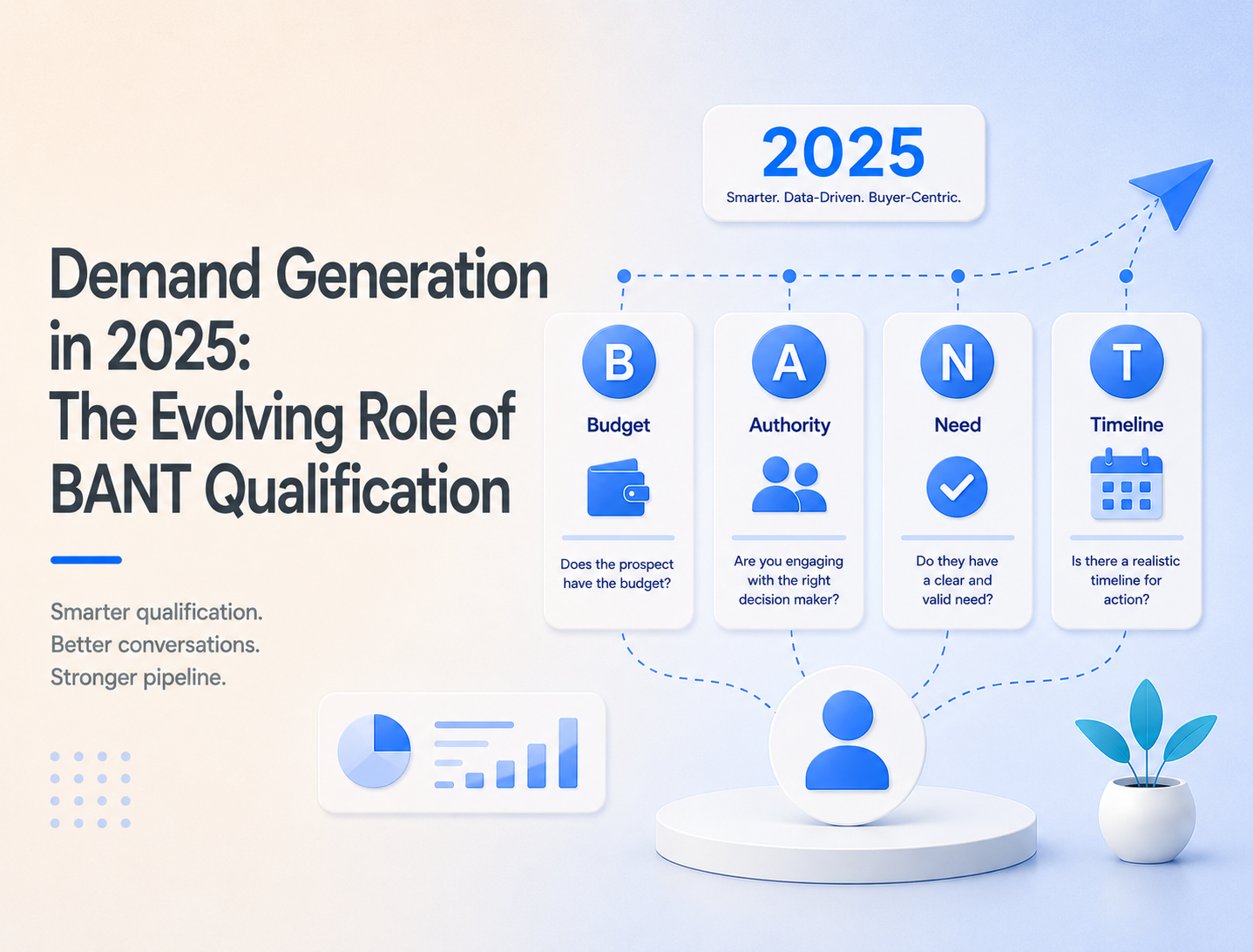
Demand Generation in 2025: The Evolving Role of BANT Qualification
BANT Qualification


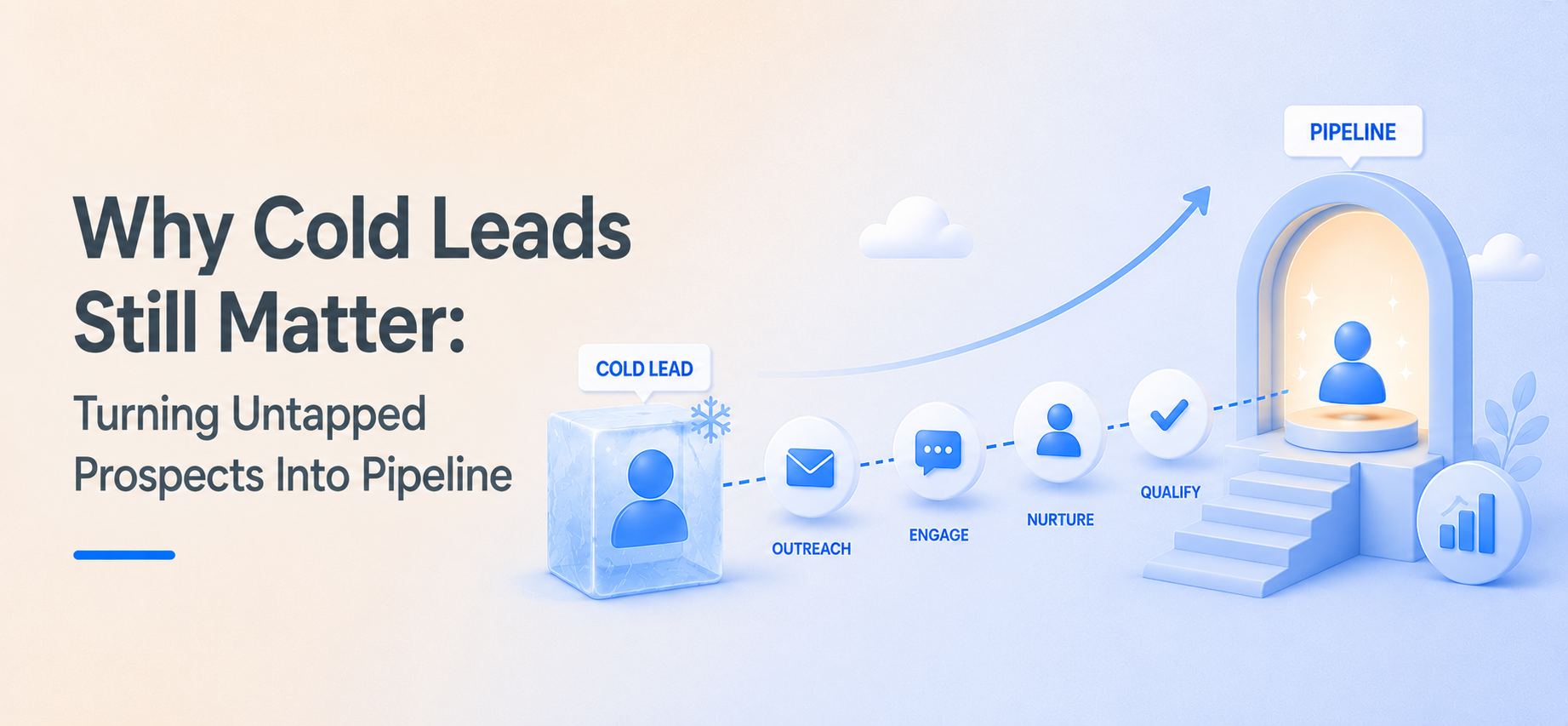
Cold leads aren't dead—they're often your greatest untapped source of future revenue. Learn how modern demand generation teams identify, engage, and qualify cold prospects to build stronger pipeline without relying solely on inbound intent.
-
Pipeline Generation
Introduction
In today's B2B marketing landscape, "intent" has become one of the most valuable words in demand generation. Organizations invest heavily in identifying buyers who are actively researching solutions, engaging with content, or requesting demonstrations. While this strategy is effective, it has also created an unintended consequence: many marketing teams have stopped seeing value in cold leads.
That assumption can be expensive.
Today's cold lead may become tomorrow's buying committee member, executive sponsor, or decision-maker. More importantly, every qualified opportunity starts somewhere—and for many organizations, it starts as a prospect with little or no prior engagement.
High-performing demand generation teams understand that cold leads are not low-value leads. They're simply early-stage prospects who require a different engagement strategy. Rather than waiting for buyers to identify themselves, these organizations create opportunities through thoughtful outreach, qualification, and relationship building.
For B2B technology companies targeting complex buying cycles and enterprise accounts, the ability to convert cold prospects into qualified pipeline remains a competitive advantage that technology alone cannot replace.
What Cold Leads Mean for Demand Generation Marketers
A cold lead is a prospect who fits your ideal customer profile but has not yet engaged meaningfully with your organization. Unlike warm or marketing-qualified leads, cold leads have little awareness of your brand, limited interaction with your content, and no confirmed buying intent.
That does not mean they lack potential.
Cold leads often represent:
For demand generation leaders, cold leads provide an opportunity to proactively shape demand rather than waiting for it to emerge.
Common Challenges Marketers Face
Converting cold leads into pipeline requires overcoming obstacles that differ from those associated with warm or qualified leads.
Mistaking Lack of Engagement for Lack of Opportunity
A prospect who hasn't downloaded content or attended a webinar may simply be unaware of your organization—not uninterested in solving the business problem you address.
Over-Reliance on Intent Signals
Intent data is valuable, but it only identifies buyers who are already demonstrating research activity. Organizations that focus exclusively on intent may overlook significant portions of their addressable market.
Generic Outreach
Cold prospects rarely respond to broad messaging. Without personalization, industry relevance, or executive-level business context, outreach often fails to capture attention.
Inconsistent Qualification
Many organizations begin outreach without clearly defining which cold prospects represent the highest strategic value, leading to inefficient use of sales and marketing resources.



.png)

%201.png)


.png)


Solutions That Work
Successfully converting cold leads requires a structured demand creation strategy—not simply increasing outreach volume.
1. Prioritize Ideal Customer Fit Before Engagement
Effective cold lead programs begin with account selection rather than messaging.
Instead of contacting every available prospect, identify organizations that closely match your ideal customer profile based on:
Starting with the right audience improves every downstream metric.
2. Lead With Business Challenges, Not Product Features
Cold prospects are rarely interested in product capabilities during an initial conversation.
Instead, outreach should demonstrate an understanding of industry trends, operational challenges, regulatory pressures, or competitive dynamics that executives are already navigating.
Conversations built around business outcomes consistently outperform product-first messaging.
3. Create Multiple Paths to Engagement
Not every cold lead is ready for a sales discussion. High-performing organizations create multiple engagement options, including:
Offering value before requesting a meeting builds credibility and encourages continued engagement.
4. Measure Progression Instead of Immediate Conversion
Cold lead success should not be judged solely by immediate meeting rates.
Instead, monitor how prospects progress through stages such as:
This approach provides a more accurate picture of long-term demand creation.
Where Site Ascend Fits
Once organizations establish a disciplined cold lead strategy, consistent execution becomes the determining factor in pipeline success.
Site Ascend helps technology companies operationalize cold lead engagement through U.S.-based outreach, executive meeting programs, lead qualification initiatives, partner marketing support, and event marketing campaigns. By combining structured qualification with director-level prospect targeting and performance-based engagement models, Site Ascend helps organizations convert high-value cold prospects into meaningful sales conversations without replacing their internal marketing or sales teams.
Actionable Steps for Marketers
The Cold Lead Readiness Audit
Evaluate your current demand creation strategy by assessing these five areas.
1. Targeting Precision
Are your cold outreach efforts focused on organizations that closely match your ideal customer profile?
2. Business Relevance
Does your messaging address executive priorities and business challenges instead of product features?
3. Engagement Diversity
Do prospects have multiple ways to engage with your organization beyond scheduling a meeting?
4. Qualification Process
Are clear qualification standards applied before opportunities are transferred to sales?
5. Performance Measurement
Are you measuring long-term progression toward pipeline rather than only initial response rates?
Organizations that perform well across these dimensions typically generate stronger pipeline quality while making more efficient use of sales and marketing resources.
Comparison of Market Solutions
Organizations use a variety of approaches to engage cold leads.
Internal demand generation teams offer strong product knowledge and brand alignment but may struggle to scale personalized outreach across large target account lists.
Technology platforms improve segmentation, automation, and campaign orchestration but depend on high-quality data and well-defined processes.
Traditional outsourced providers can increase outreach capacity, though executive engagement quality, personalization, and qualification consistency vary widely.
Performance-based execution partners combine structured outreach, human qualification, and measurable business outcomes, helping organizations expand pipeline while maintaining visibility into engagement quality and qualification standards.
The best approach depends on organizational maturity, available resources, target account complexity, and revenue objectives.
Conclusion
Cold leads remain one of the most underutilized assets in B2B demand generation. While many organizations focus exclusively on buyers already demonstrating intent, sustainable pipeline growth also depends on proactively creating demand among high-value prospects who have yet to engage.
By focusing on ideal customer fit, business-centered conversations, diversified engagement strategies, and structured qualification processes, marketing leaders can transform untapped prospects into measurable revenue opportunities.
For organizations looking to scale these efforts, Site Ascend provides execution support through executive meetings, lead qualification, channel marketing, and event marketing programs that help turn strategic cold outreach into qualified sales conversations.
If you're ready to unlock the pipeline potential within your target accounts, contact Site Ascend or start a pilot program.
Are cold leads still valuable in modern B2B marketing?

How should marketing teams prioritize cold leads?
What metric best measures cold lead success?


Start your pilot campaign today and explore the full range of Site Ascend's demand generation capabilities. Experience firsthand how we can enhance your efficiency, streamline your processes, and drive growth.
RELATED