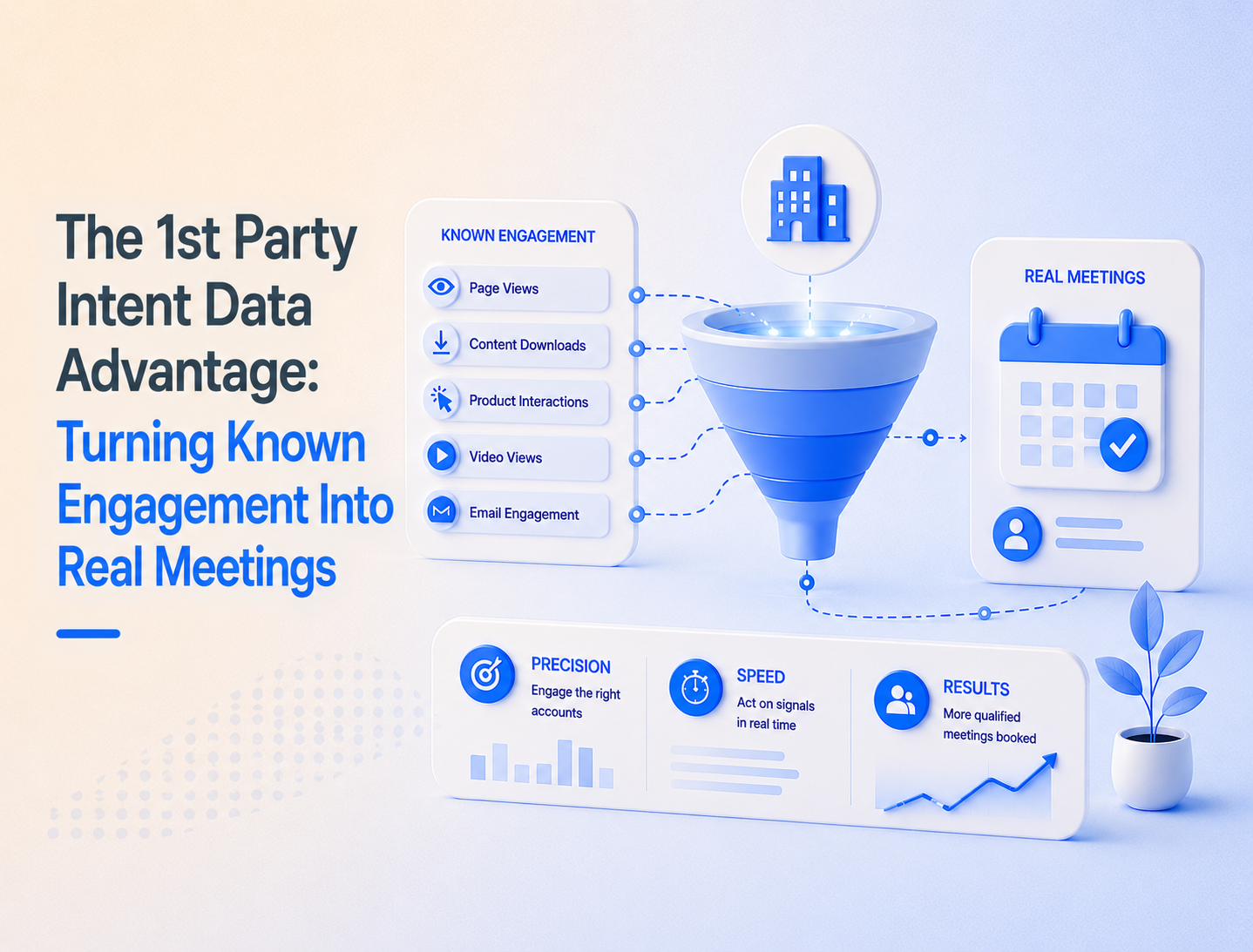
The 1st Party Intent Data Advantage: Turning Known Engagement Into Real Meetings
Demand Generation


Enterprise buyers engage across multiple touchpoints before making a purchasing decision. Learn how an omni-channel marketing strategy creates a connected buyer experience, improves engagement across the buying committee, and generates stronger, more predictable pipeline than isolated campaigns.
-
Demand Generation
Introduction
Enterprise buyers don't make purchasing decisions after a single interaction. They research independently, attend webinars, speak with peers, visit websites, download resources, meet vendors at events, and engage with sales teams over weeks—or even months—before making a decision. Yet many demand generation programs still treat each marketing channel as an isolated campaign with separate goals, messaging, and reporting.
The result is a fragmented buyer experience that creates activity but often fails to generate qualified pipeline.
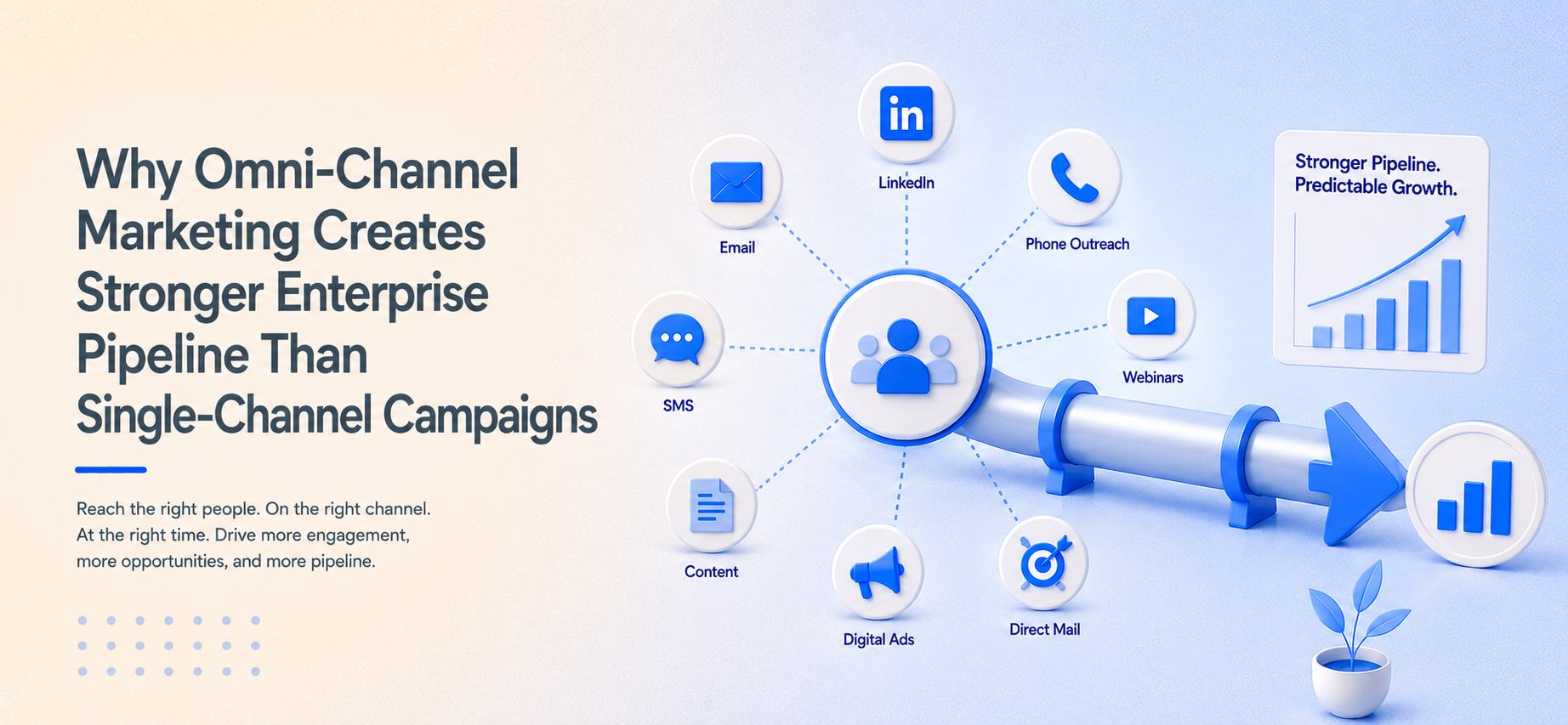
Omni-channel marketing addresses this challenge by connecting every buyer interaction into one cohesive journey. Rather than optimizing individual campaigns, it aligns messaging, timing, and engagement across channels so buyers experience a consistent conversation regardless of where they engage.
For enterprise technology companies, the goal isn't to be present on every channel—it's to create a unified buying experience that builds trust, supports the buying committee, and consistently moves target accounts toward qualified sales conversations.
What Omni-Channel Marketing Means for Demand Generation Marketers
Omni-channel marketing is a coordinated demand generation strategy that delivers a consistent buyer experience across every marketing and sales touchpoint. Unlike multi-channel marketing, where channels often operate independently, omni-channel marketing ensures every interaction supports the same business objective and builds on previous engagements.
For demand generation teams, this means aligning messaging, timing, account targeting, and sales outreach so buyers experience one connected journey instead of multiple disconnected campaigns.
The objective isn't simply increasing channel coverage. It's creating continuity throughout the buying process so every interaction helps move accounts closer to becoming qualified pipeline.
Common Challenges Marketers Face
Many organizations execute campaigns independently across departments. Event teams, digital marketers, partner marketers, and sales development representatives may all contact the same account without coordinating messaging or timing.
Another challenge is inconsistent messaging. Buyers receive different value propositions depending on the channel they're interacting with, making it difficult to understand the organization's overall solution or business value.
Measurement also becomes difficult when every channel reports success independently. Marketing may celebrate webinar registrations while sales measures meetings and leadership evaluates pipeline, leaving no shared understanding of campaign effectiveness.
Finally, organizations frequently optimize individual channel performance instead of buyer progression. Improving one campaign means little if prospects stall before reaching qualified conversations.



.png)

%201.png)


.png)


Solutions That Work
Align Every Channel Around the Same Buyer Journey
Instead of planning campaigns independently, map every marketing and sales touchpoint to the enterprise buying journey. Each interaction should reinforce previous conversations while preparing buyers for the next stage, creating a more consistent and intentional experience.
Maintain Consistent Messaging Across Teams
Whether buyers engage through partner programs, events, outbound outreach, or educational content, they should hear the same core business narrative. Consistency builds trust, reinforces value propositions, and reduces confusion throughout the purchasing process.
Measure Account Progression Instead of Channel Performance
Evaluate success by how accounts move through qualification, executive engagement, opportunity creation, and pipeline development—not by individual channel metrics alone. Shared KPIs encourage stronger collaboration across marketing and sales teams.
Coordinate Timing Between Marketing and Sales
Marketing engagement creates the greatest value when sales outreach complements—not duplicates—buyer interactions. Coordinated timing improves response rates, strengthens buyer relationships, and increases the likelihood of qualified meetings.
Where Site Ascend Fits
A successful omni-channel strategy requires consistent execution across multiple buyer touchpoints. Site Ascend helps technology companies operationalize this approach through Executive Meetings that connect sales with director-level decision-makers, Lead Qualification that validates buyer readiness, Event Marketing programs that increase qualified registrants, and Channel Marketing initiatives that support partner-led demand generation. These programs extend existing marketing strategies while helping organizations create more connected buyer experiences and stronger pipeline outcomes.
Actionable Steps for Marketers
Complete an Omni-Channel Alignment Review
Instead of evaluating channels individually, assess how effectively they work together to move buyers toward qualified opportunities.
Step 1: Map Every Buyer Touchpoint
Document every interaction a target account may have with your organization—from initial awareness through sales engagement. Identify where channels overlap, conflict, or leave gaps in the buying experience.
Step 2: Audit Messaging Consistency
Review messaging across campaigns, partner programs, events, outbound outreach, and sales conversations. Confirm that every team communicates the same strategic value while adapting details for the appropriate audience.
Step 3: Identify Buyer Journey Gaps
Look for stages where engagement drops significantly. Determine whether buyers lack educational resources, timely follow-up, executive engagement, or qualification support at those points.
Step 4: Align Success Metrics
Replace isolated channel KPIs with shared business outcomes such as qualified meetings, buying committee engagement, opportunity creation, and pipeline contribution.
Step 5: Establish Cross-Functional Planning
Bring together marketing, sales, partner marketing, and event teams on a regular basis to coordinate campaign timing, messaging priorities, and account strategies. Continuous alignment creates a more seamless experience for buyers.
Conducting this review quarterly helps organizations identify disconnects before they impact pipeline performance.
Comparison of Market Solutions
Organizations generally approach buyer engagement in three ways.
Some continue operating individual marketing channels independently. While this structure is relatively simple to manage, it often results in inconsistent messaging, duplicate outreach, fragmented reporting, and disconnected buyer experiences that make pipeline generation less predictable.
Others invest primarily in marketing technology platforms to centralize campaign execution and customer data. These platforms improve visibility and coordination but still require well-defined processes, aligned teams, and consistent messaging to deliver meaningful business outcomes.
Many enterprise organizations combine internal marketing leadership with specialized execution partners that support activities such as executive meeting generation, lead qualification, channel engagement, and event recruitment. This approach helps maintain a connected buyer journey while extending internal capacity and improving operational consistency.
Ultimately, the strongest omni-channel strategies are built around buyer progression—not channel performance. Organizations that align teams, messaging, and measurement around the complete buying journey consistently create stronger enterprise pipeline.
Conclusion
Enterprise buyers no longer follow a linear path to purchase, making disconnected marketing campaigns increasingly ineffective. Organizations that coordinate every buyer interaction into one cohesive experience are better positioned to build trust, engage multiple stakeholders, and generate qualified pipeline.
By aligning messaging across channels, measuring account progression instead of isolated campaign metrics, and coordinating marketing with sales execution, demand generation leaders can create more predictable revenue outcomes while delivering a better buying experience.
If your organization is looking to strengthen its omni-channel demand generation strategy, contact Site Ascend.
What is the difference between multi-channel and omni-channel marketing?

Why is omni-channel marketing important for enterprise demand generation?
How should omni-channel marketing success be measured?


Start your pilot campaign today and explore the full range of Site Ascend's demand generation capabilities. Experience firsthand how we can enhance your efficiency, streamline your processes, and drive growth.
RELATED