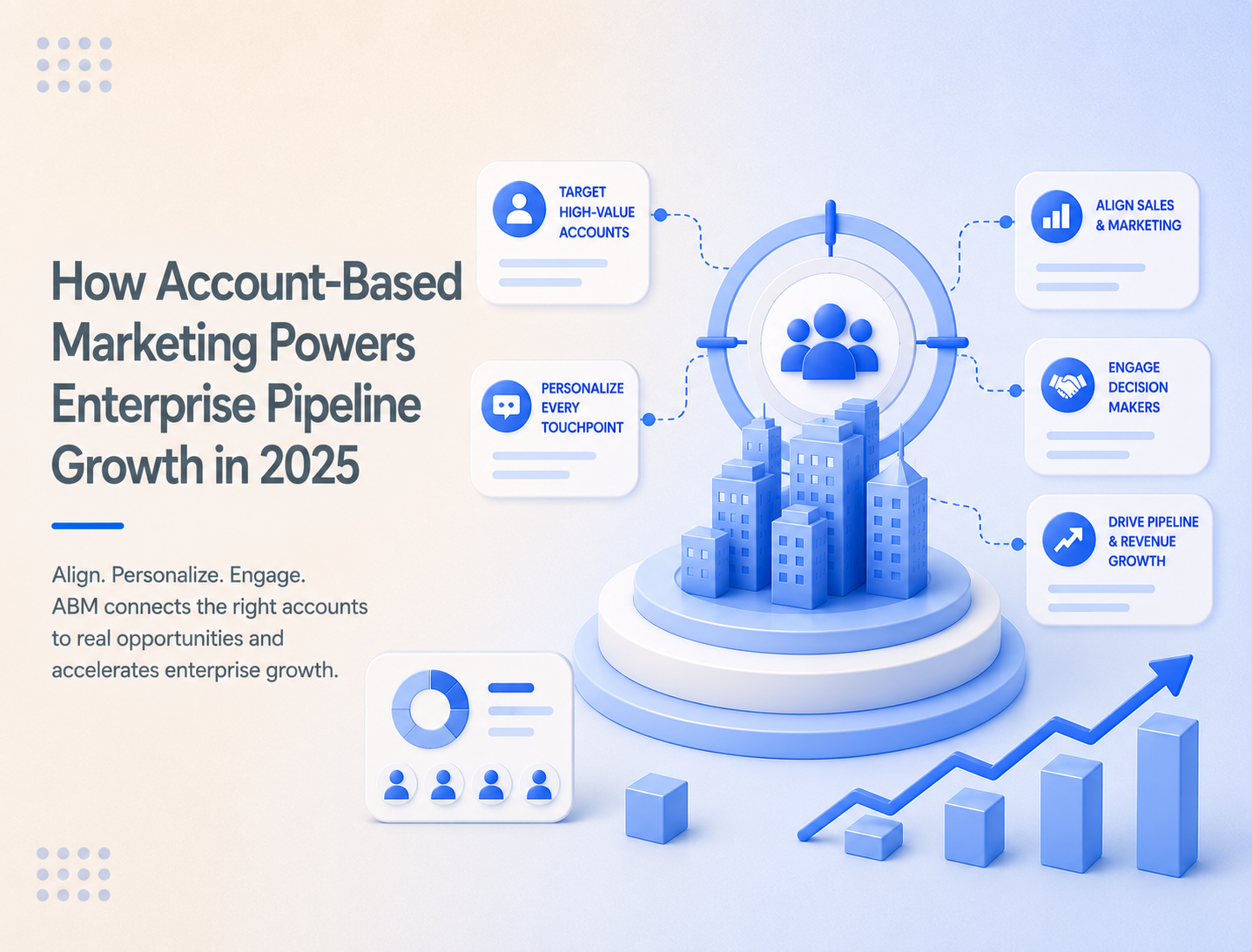
How Account-Based Marketing Powers Enterprise Pipeline Growth in 2025
Account-Based Marketing


Enterprise buyers have different priorities, challenges, and decision criteria depending on their role. Learn how persona-based messaging helps demand generation teams deliver more relevant conversations, improve engagement with key stakeholders, and convert more target accounts into qualified pipeline.
-
Demand Generation
Introduction
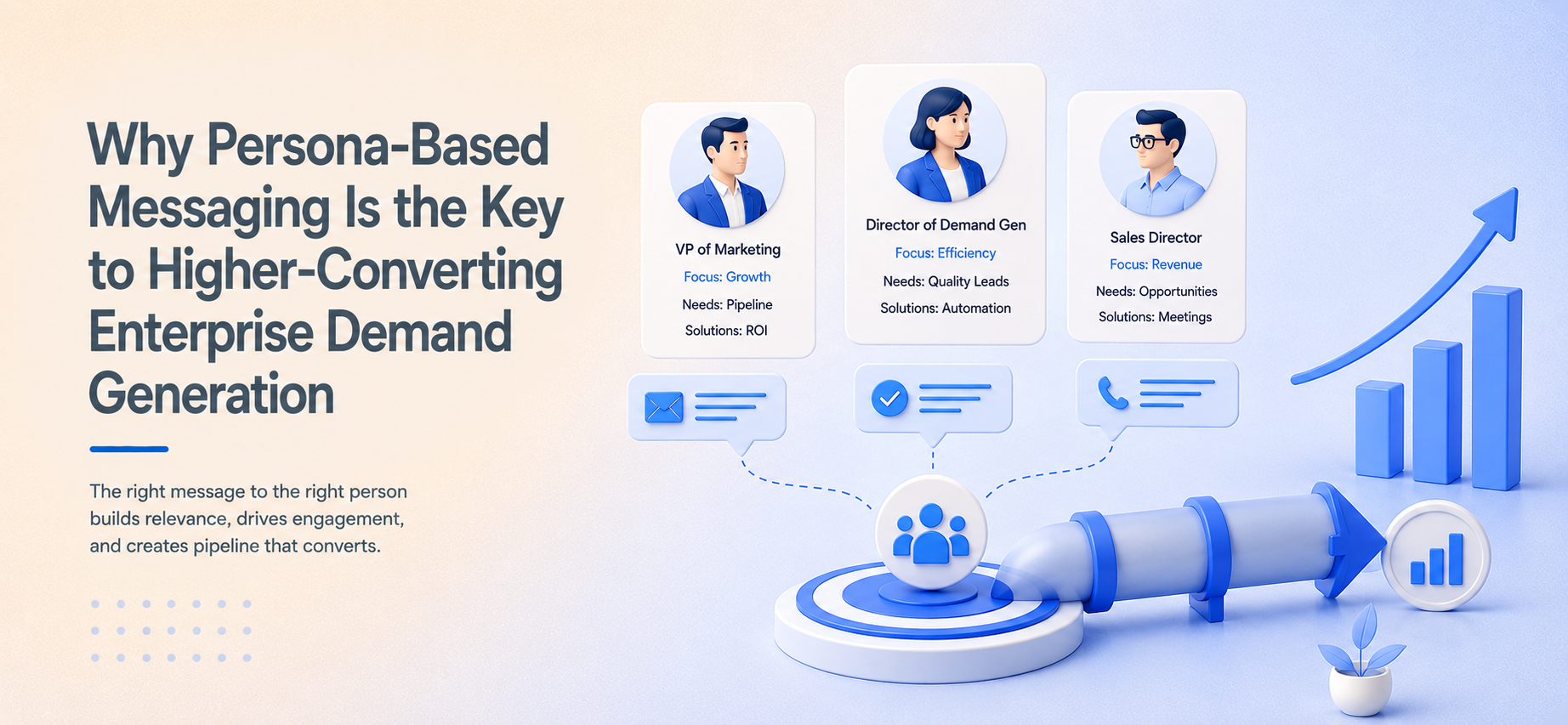
Enterprise buying decisions rarely come down to a single conversation with a single decision-maker. A technology purchase may involve a CMO focused on business outcomes, an IT leader evaluating implementation risk, a finance executive analyzing ROI, and operational stakeholders assessing day-to-day usability. While they're evaluating the same solution, they're asking entirely different questions.
Yet many demand generation campaigns still rely on one message for every audience.
This disconnect is one of the biggest reasons enterprise campaigns generate engagement without producing qualified pipeline. Buyers are more likely to respond when messaging reflects their specific priorities, responsibilities, and business objectives.
Persona-based messaging helps demand generation teams move beyond broad campaigns by delivering relevant conversations to every stakeholder involved in the buying process. The result isn't simply higher engagement—it's stronger sales alignment, more qualified meetings, and a more predictable pipeline.
What Persona-Based Messaging Means for Demand Generation Marketers
Persona-based messaging is the practice of tailoring marketing and sales communications to the responsibilities, motivations, challenges, and success metrics of specific buyer roles within an organization.
Rather than creating one campaign for an entire target account, marketers develop messaging that speaks directly to executives, department leaders, technical evaluators, financial stakeholders, and end users. Each persona receives information that answers the questions most relevant to their role in the purchasing decision.
For demand generation teams, this approach creates more meaningful engagement throughout the buying committee while improving the likelihood that multiple stakeholders move through the buying journey together.
Common Challenges Marketers Face
One common mistake is assuming every stakeholder values the same message. Marketing may emphasize product features while executives care more about revenue growth, operational efficiency, or competitive advantage.
Another challenge is relying on job titles instead of business responsibilities. Two directors with similar titles may influence buying decisions in completely different ways depending on their department, priorities, and organizational objectives.
Marketing and sales teams also frequently use inconsistent messaging. Prospects receive one narrative during marketing engagement and another during sales outreach, creating confusion and reducing trust.
Finally, many organizations measure campaign performance at the account level without understanding which personas actually engaged. This makes it difficult to identify messaging gaps within the buying committee.



.png)

%201.png)


.png)


Solutions That Work
Build Messaging Around Business Outcomes
Instead of leading with product capabilities, focus each message on the business outcomes that matter most to the intended audience. Executives often prioritize revenue growth and strategic initiatives, while operational leaders care more about efficiency, execution, and measurable improvements.
Create Persona-Specific Value Propositions
Develop separate messaging frameworks for each key stakeholder involved in enterprise buying decisions. Tailoring value propositions helps every decision-maker quickly understand why the solution matters from their perspective.
Align Marketing and Sales Messaging
Ensure marketing campaigns, outbound outreach, and sales conversations reinforce the same core narrative while adapting the details for each persona. Consistent messaging builds credibility and creates a smoother buying experience.
Continuously Refine Messaging Using Buyer Feedback
Persona development shouldn't be a one-time exercise. Regularly review meeting outcomes, sales feedback, objection trends, and campaign performance to refine messaging as buyer priorities evolve.
Where Site Ascend Fits
Developing effective persona-based messaging is only valuable if organizations consistently deliver it to the right stakeholders. Site Ascend helps technology companies execute persona-driven outreach through Executive Meetings with director-level and above decision-makers, Lead Qualification that validates buyer readiness, Channel Marketing programs that maintain partner messaging consistency, and Event Marketing initiatives that connect relevant audiences with meaningful conversations. These services help organizations operationalize strong messaging strategies while keeping the focus on qualified pipeline.
Actionable Steps for Marketers
Conduct a Persona Messaging Alignment Assessment
Evaluate whether your current campaigns truly address the needs of every stakeholder involved in enterprise buying decisions.
Step 1: Identify Every Buying Persona
List the executive, technical, financial, operational, and business stakeholders who typically influence purchasing decisions. Consider both formal decision-makers and informal influencers.
Step 2: Document Individual Priorities
For each persona, identify their primary objectives, biggest concerns, success metrics, and common purchasing questions. Avoid assuming every stakeholder shares the same priorities.
Step 3: Audit Existing Messaging
Review campaign assets, sales presentations, outbound messaging, and event content. Determine whether each persona receives messaging that reflects their specific business challenges.
Step 4: Compare Engagement Across Personas
Analyze which stakeholders respond most frequently and which remain underrepresented throughout the buying journey. Low engagement often signals messaging gaps rather than poor account selection.
Step 5: Establish an Ongoing Review Process
Schedule regular reviews with marketing and sales teams to update persona insights, adjust messaging, and incorporate feedback from recent opportunities.
A structured assessment helps organizations create messaging that resonates with every member of the buying committee instead of relying on generalized campaigns.
Comparison of Market Solutions
Organizations approach persona-based messaging in several different ways.
Some rely on broad, standardized messaging that treats every prospect similarly. While this simplifies campaign execution, it often fails to address the diverse priorities of enterprise buying committees and can reduce engagement with senior decision-makers.
Others use technology platforms that personalize messaging based on behavioral data or account segmentation. These tools improve targeting efficiency but still depend on well-developed buyer personas and thoughtful messaging strategies to deliver meaningful results.
Many organizations combine internal strategy with specialized execution partners that help deliver persona-specific outreach, qualify stakeholder interest, and coordinate conversations across multiple buyer roles. This approach allows marketing teams to maintain strategic control while improving execution consistency and expanding engagement with high-value decision-makers.
The most successful enterprise demand generation programs recognize that personalization is not simply about using someone's name—it's about understanding what success looks like from their perspective and communicating accordingly.
Conclusion
Persona-based messaging has become essential for enterprise demand generation because today's buying decisions involve diverse stakeholders with unique priorities, concerns, and objectives. Organizations that communicate the same message to every audience risk creating engagement without generating qualified opportunities.
By aligning messaging with specific buyer personas, coordinating marketing and sales communications, and continuously refining insights based on real buyer behavior, demand generation teams can improve executive engagement, strengthen sales conversations, and build more predictable pipeline.
If your organization is looking to translate stronger messaging into more qualified sales conversations, contact Site Ascend.
Why is persona-based messaging important in enterprise demand generation?

How many personas should demand generation teams target?
How can marketers measure the effectiveness of persona-based messaging?


Start your pilot campaign today and explore the full range of Site Ascend's demand generation capabilities. Experience firsthand how we can enhance your efficiency, streamline your processes, and drive growth.
RELATED