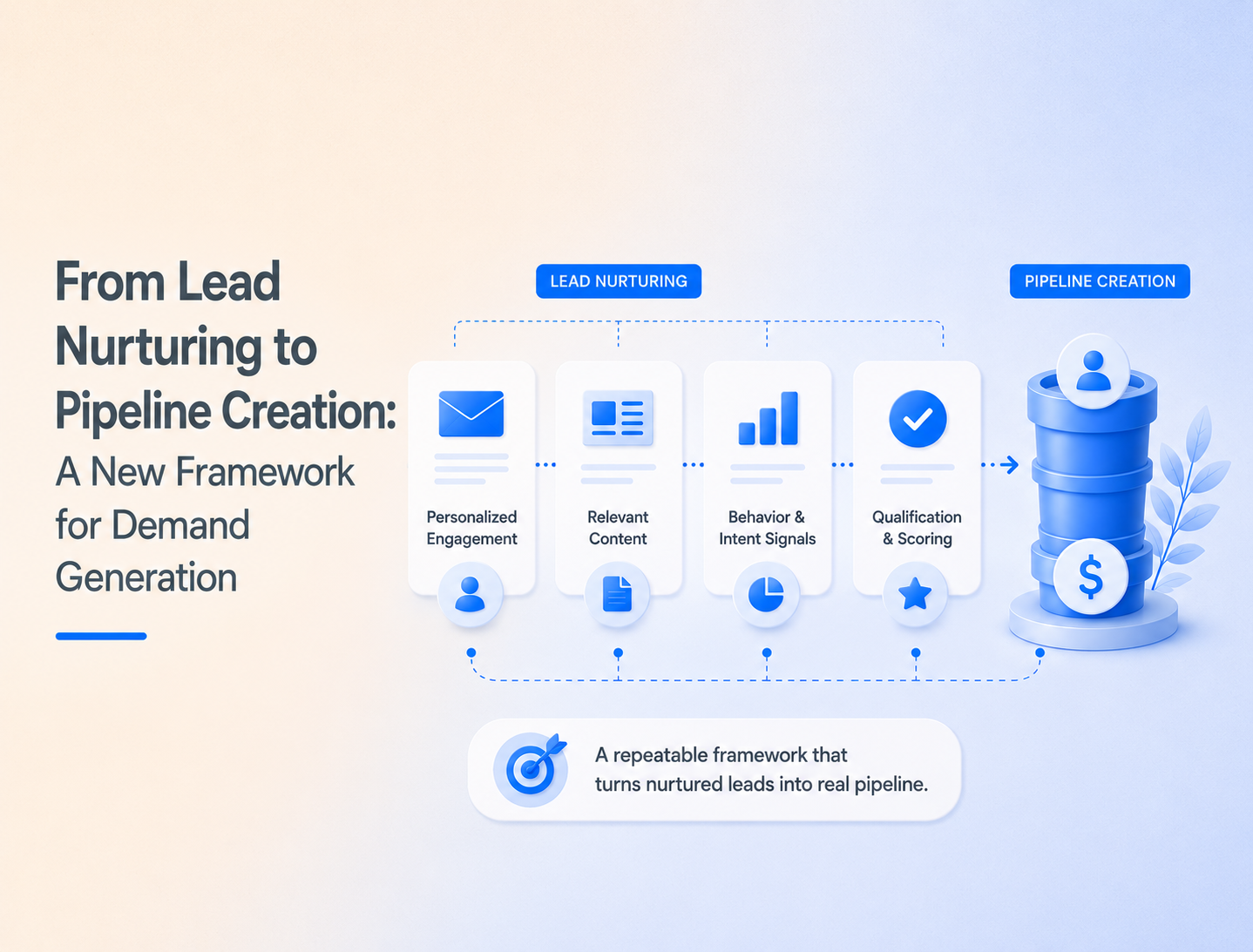
From Lead Nurturing to Pipeline Creation: A New Framework for Demand Generation
Demand Generation


Most SaaS teams don’t have a lead problem—they have a conversion problem. Here’s how to turn target accounts into director-level, sales-ready meetings with an outcomes-first lead gen model.
-
Lead Generation

Introduction
SaaS demand gen is having a weird year: you can still generate “leads,” but converting them into real pipeline is harder than ever. The culprit usually isn’t your ads, your forms, or your messaging.
It’s the gap between interest and a booked meeting.
That gap is where pipeline quietly dies—after the click, after the download, after the webinar registration—when follow-up isn’t fast enough, targeted enough, or consistent enough to turn intent into a calendar invite your sales team will actually show up for.
This guide is built for demand generation teams that want a clean, measurable path from target accounts → sales-ready meetings, using SaaS lead generation services the way they’re supposed to work in 2026: as a conversion engine, not a lead factory.
What “SaaS lead generation services” means in 2026
In a lot of orgs, “lead generation services” still implies one of two things:
That’s not how modern SaaS teams win.
In 2026, SaaS lead generation services should do three jobs:
1) Create a reliable path to meetings
Not just “interest,” but scheduled conversations with the right people.
2) Protect sales time
If sales doesn’t trust the meetings, you’ll pay twice: once for the leads and again in wasted cycles.
3) Make outcomes measurable
Attribution shouldn’t stop at “lead delivered.” It should connect to meetings that actually occur.
At Site Ascend, the focus is simple: convert target accounts and opt-in leads into director-level meetings that happen—using a U.S.-based contact center, verified qualification, and reporting your team can act on in real time.
Common challenges SaaS marketers run into (and why they keep repeating)
Leads are easy. Qualified meetings are not.
Your MarTech can capture forms all day. But if your lead intake isn’t validated, routed, and worked quickly, those leads decay.
SDR follow-up is inconsistent—and it’s not their fault.
Even strong SDR teams get stretched across inbound, outbound, account research, sequences, events, and partner plays. When everything is “high priority,” response times slip and conversion drops.
You’re optimizing for the wrong milestone.
If the internal scorecard rewards MQLs, you’ll get MQLs. If the business needs pipeline, you need a scorecard that pushes activity toward booked meetings and held meetings.
The “who” isn’t tight enough.
A lot of lead gen programs fail because targeting stops at company-level fit and ignores role-level fit. For SaaS, director+ conversations change everything: urgency, authority, and deal motion.
Sales stops trusting marketing-sourced meetings.
Once sales labels marketing meetings as “bad,” it takes months to regain confidence—even if you fix the process. Trust is earned through consistency.



.png)

%201.png)


.png)


Solutions that work
If you want lead gen services that actually turn into pipeline, your solution needs to be built around conversion, not volume.
Here’s the model that works best for SaaS teams that need predictable meetings without adding headcount.
1) Start with role-first qualification (director+ by design)
A common reason meetings don’t convert is simple: the wrong attendee.
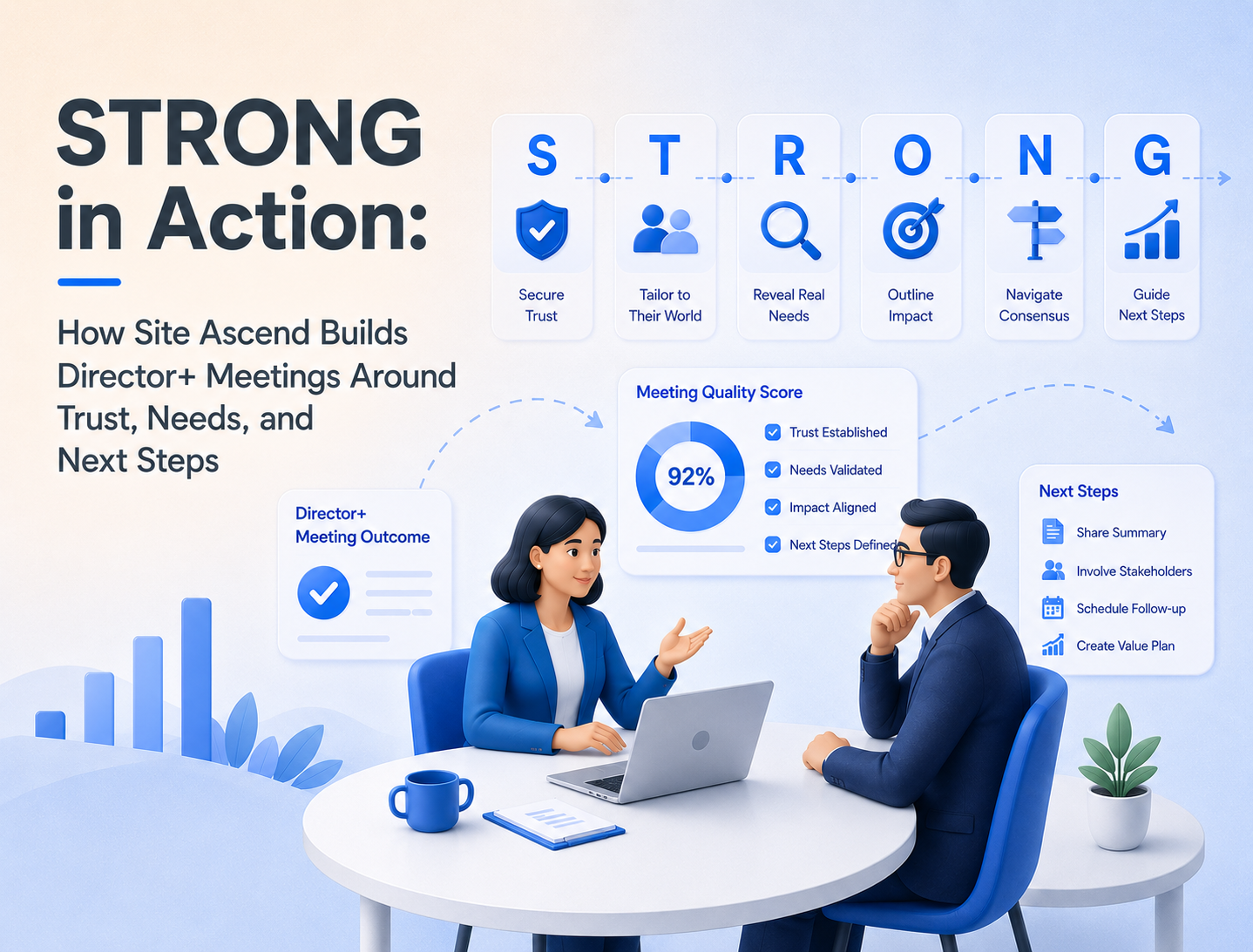
Site Ascend targets director-level and above for meetings, so your calendar is filled with people who can:
That shift alone raises the quality ceiling on your pipeline.
2) Use real conversation to verify fit (not form assumptions)
Forms don’t confirm urgency, timeline, or internal ownership. They confirm someone clicked.
A conversion-first SaaS lead gen service should validate fit through live outreach—confirming:
That’s where Site Ascend’s U.S.-based contact center matters: it’s built for consistent, high-quality conversations, not outsourced volume.
3) Align the output to the outcome: booked meetings that occur
A lot of providers sell “leads delivered.” The issue is obvious: you’re paying for activity, not impact.
Site Ascend is structured around only paying for meetings that occur—because the held meeting is the true conversion milestone that sales trusts.
This changes behavior across the program:
4) Make the program operationally visible (so marketing can steer it)
If your lead gen partner can’t show you what’s happening in real time, you can’t improve it in real time.
Site Ascend provides real-time reporting so demand gen leaders can see:
This is how you move from “vendor management” to “pipeline operations.”
5) Protect brand and process with white-labeled outreach (when needed)
For teams running multi-product GTM, partner motions, or strict brand controls, white-labeling matters.
Site Ascend can operate as an extension of your team—keeping messaging, positioning, and experience consistent while still driving measurable meeting outcomes.
Actionable steps: a practical checklist for sales-ready meetings
Use this as your internal audit before you hire (or replace) a lead gen service.
Define “sales-ready” in one sentence
If you can’t define it clearly, you can’t build toward it.
A strong starting definition:
Tighten targeting around roles, not just accounts
Build a qualification rubric that sales agrees with
Keep it simple. Make it auditable. Examples:
Track “held meetings” as the core KPI
Not meetings booked. Not leads delivered. Not replies.
Held meetings.
If your provider won’t align to that KPI, you’ll keep paying for leakage.
Set a feedback loop that improves weekly
Comparison of market solutions
Most SaaS teams end up choosing between three approaches. The right option depends on what outcome you’re trying to control.
Outcome 1: Cost predictability
Outcome 2: Quality control
Outcome 3: Operational transparency
Conclusion
In 2026, the teams that win aren’t the ones generating the most leads.
They’re the ones converting target accounts into real sales conversations—consistently, predictably, and with a quality bar sales respects.
If you’re evaluating SaaS lead generation services, don’t start by asking how many leads you’ll get.
Start by asking:
If you want a pilot built around outcomes (not lead volume), Site Ascend is designed for exactly that: turning target accounts into director-level meetings that actually happen—without adding headcount. Contact Site Ascend.
What’s the difference between SaaS lead generation services and appointment setting?

How do I know if a meeting is actually “sales-ready”?
Should we outsource SDR work or hire more SDRs?


Start your pilot campaign today and explore the full range of Site Ascend's demand generation capabilities. Experience firsthand how we can enhance your efficiency, streamline your processes, and drive growth.