Technographics in 2025: Why Knowing the Stack Isn’t the Same as Knowing the Buyer
Demand Generation


Attribution models can reveal what influenced pipeline—but in 2025, they fall short without fast human follow-through. Learn why accurate credit doesn’t guarantee momentum, where attribution misses real buyer friction, and how demand gen teams are using human engagement to turn high-influence signals into director-level meetings and pipeline acceleration.
-
Pipeline Performance
Introduction
Attribution models were supposed to settle the debate.
Which channels work?
Which campaigns deserve more budget?
Which touches actually influence revenue?
In theory, attribution gives demand generation leaders a clean line from marketing activity to pipeline impact. In practice, most teams in 2025 are staring at dashboards that are technically correct… and strategically useless.
Because attribution answers what happened.
It rarely answers what to do next.
Your model can tell you that a partner webinar influenced a deal. It can tell you that a paid campaign drove the first touch. It can even assign fractional credit across ten interactions. But if that insight doesn’t change how you engage buyers in real time, it stays a post-mortem — not a growth lever.
And in 2025, with longer sales cycles and noisier buying committees, post-mortems don’t accelerate pipeline. Engagement does.
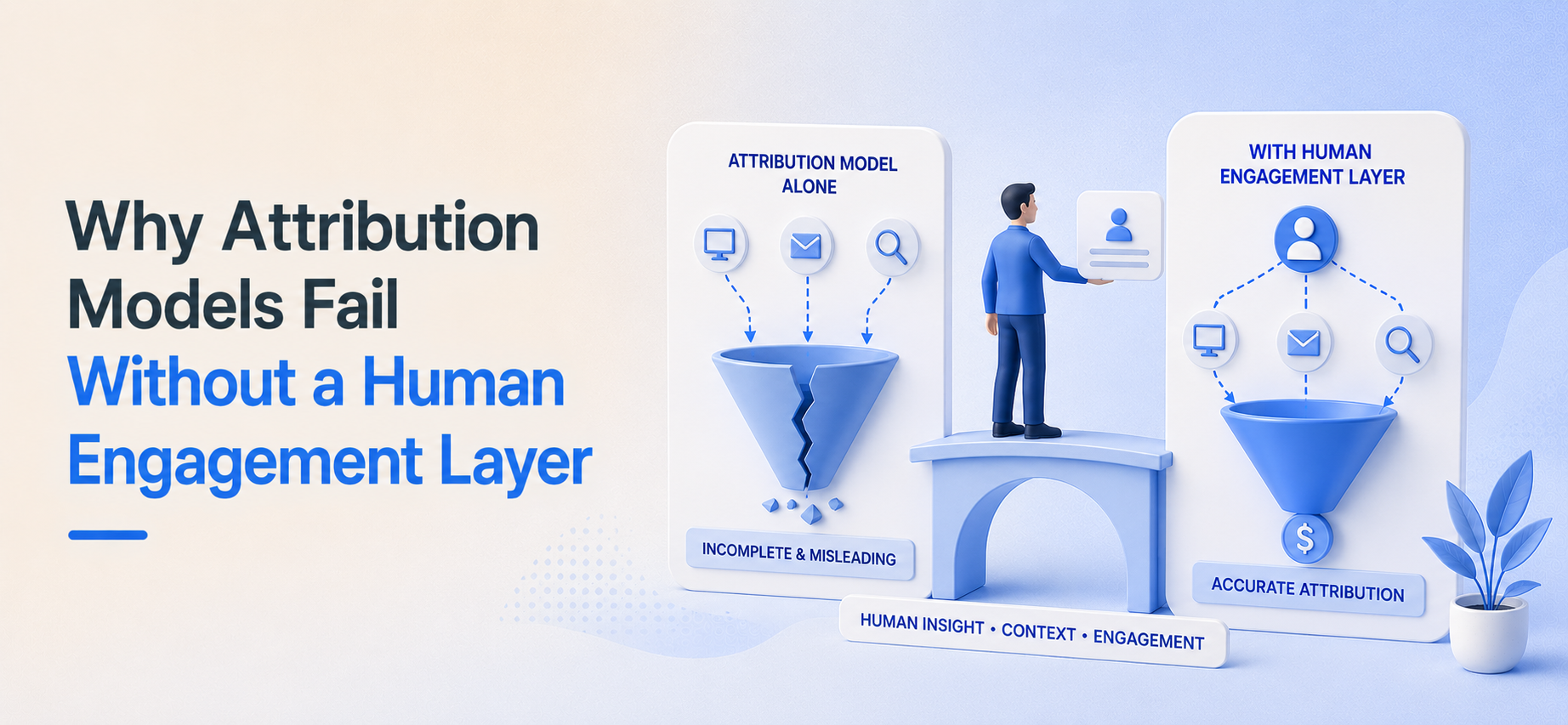
Attribution is valuable. But without a human engagement layer, it’s not a strategy. It’s a scoreboard after the game is already over.
What Attribution Models Means for Demand Generation Marketers and other titles that meet Site Ascend’s ICP
Attribution models are frameworks that assign credit to marketing touches that lead to pipeline or revenue. In B2B tech, they help demand gen teams understand how awareness, engagement, events, partners, and outbound work together over time.
They’re used to guide decisions like:
In a world of tighter budgets, attribution models feel like safety. They protect marketers from “gut feel” decisions and help explain spending to leadership.
But attribution models are only as useful as the actions they trigger.
If your model says “this campaign drove pipeline,” but your buyer journey still relies on digital touches to eventually convert on their own, you don’t actually get better results — you just get better reporting.
Common Challenges Marketers Face
The first challenge is that attribution is backward-looking by design. Even the most advanced multi-touch model is analyzing what already happened, not what buyers need next. It can tell you which channel influenced a deal, but not whether the buyer was ready to take a meeting at that moment.
The second issue is over-crediting activity and under-crediting momentum. Models love clicks, visits, registrations, and downloads because those are trackable. But B2B tech deals don’t move because someone clicked. They move because someone senior had a real conversation that clarified impact and urgency.
Which leads to the biggest gap of all: attribution can’t see human friction. It can’t detect where a buying committee lost internal alignment. It can’t predict when a high-fit account went cold because nobody followed up in time. It can’t reflect that the people engaging were users, not decision makers.
So demand gen leaders keep experiencing the same contradiction:
attribution says a channel is working, but pipeline velocity says it isn’t.
Then there’s the operational bottleneck. Modern attribution tools surface more signals and more “next bets” than internal teams can realistically act on. When insight outpaces execution, models become noise.
In short, attribution models are getting smarter.
But without engagement to match them, impact stays flat.



.png)

%201.png)


.png)


Solutions That Work
The teams getting real value from attribution in 2025 treat their model like a trigger for human follow-through, not a trophy for measurement.
They ask a different question:
“Now that we know what influenced pipeline, how do we turn that into faster conversations?”
That’s where a human engagement layer changes everything.
When attribution tells you which channels are creating early momentum — a partner campaign, an event invite, a content download, a returning account surge — the winning teams don’t just mark it as influence. They activate it quickly with outreach that reaches senior personas.
This is exactly where Site Ascend fits into the modern attribution picture.
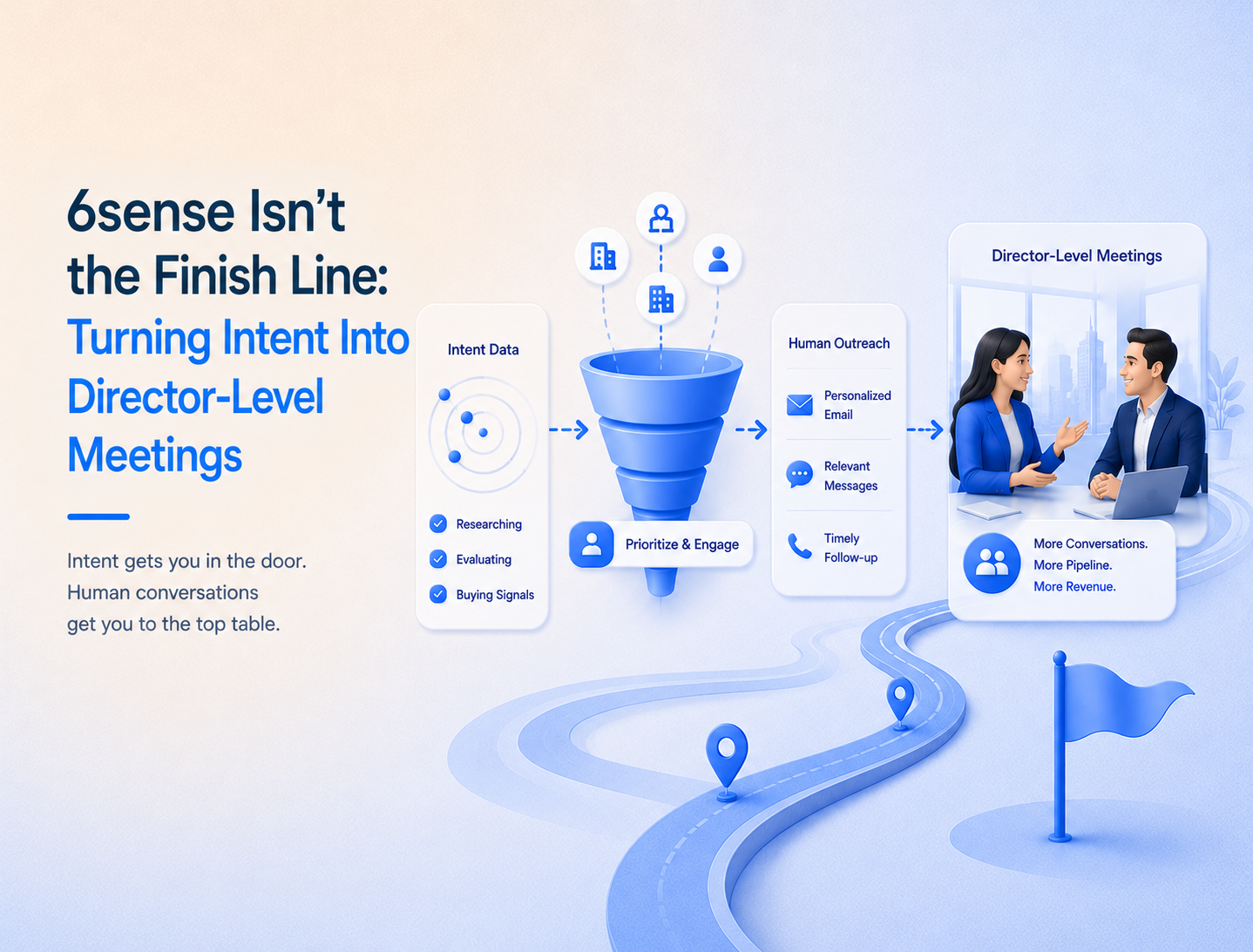
Site Ascend turns attribution insight into outcomes by acting on the moments your model highlights. When a channel shows buying motion, Site Ascend’s U.S.-based outbound team engages high-fit accounts fast, focusing on director-level stakeholders, and converts that engagement into meetings that occur.
So instead of attribution being a report that explains last quarter, it becomes an engine that improves this quarter.
For events, attribution might show that certain invites outperform — but Site Ascend ensures those high-influence registrants actually attend through outbound confirmation and SMS support. For channel motions, attribution might reveal where partner engagement spikes — and Site Ascend can activate that interest with white-labeled outreach that protects brand trust while accelerating meetings.
Attribution identifies influence.
Human engagement converts influence into pipeline.
Actionable Steps for Marketers
If your attribution model is strong but pipeline isn’t accelerating, the fix isn’t ripping out your analytics stack. It’s tightening the bridge between insight and execution.
Start thinking of attribution as real-time guidance, not quarterly reporting. When a touch pattern emerges as high-impact, build an escalation path that brings human engagement into that moment. Especially when director-level personas are involved.
Prioritize speed after high-influence signals. Attribution is most powerful when it shortens time-to-conversation. A “high-credit” channel that sits idle for days is a wasted advantage.
And measure your model differently. The question isn’t “what got credit?” It’s “what got us a meeting faster?”
Comparison of Market Solutions
Many teams rely on internal SDRs to activate attribution insights, which works when SDR bandwidth is stable and follow-up is immediate. But in 2025, attribution tools surface more triggers than internal teams can consistently act on. The result is slow response to high-influence moments.
Other outsourced outreach approaches can add scale, but they often optimize for activity volume rather than confirmed meetings, and may not be as director-level focused or performance-accountable.
Performance-based human engagement models are increasingly preferred because they align execution to what attribution is supposed to improve: pipeline outcomes. With onshore teams, director-level targeting, white-labeled partner support, and accountability tied to meetings that occur, this approach converts attribution from a reporting tool into a growth system.
Conclusion
Attribution models aren’t failing because they’re wrong.
They’re failing because they’re incomplete.
In 2025, knowing what influenced pipeline is only useful if you can act on it fast — with real human engagement that reaches decision makers before momentum fades.
If your attribution stack is telling you what works but your pipeline still feels stuck, you don’t need more measurement.
You need a better activation layer.
Contact Site Ascend to add a performance-based human engagement layer to your highest-influence channels — and start turning attribution insight into director-level meetings and real pipeline velocity.
Why can attribution models be accurate but still lead to slow pipeline?

Which attribution model works best for B2B tech in 2025?
How do you turn attribution insights into better outcomes?


Start your pilot campaign today and explore the full range of Site Ascend's demand generation capabilities. Experience firsthand how we can enhance your efficiency, streamline your processes, and drive growth.