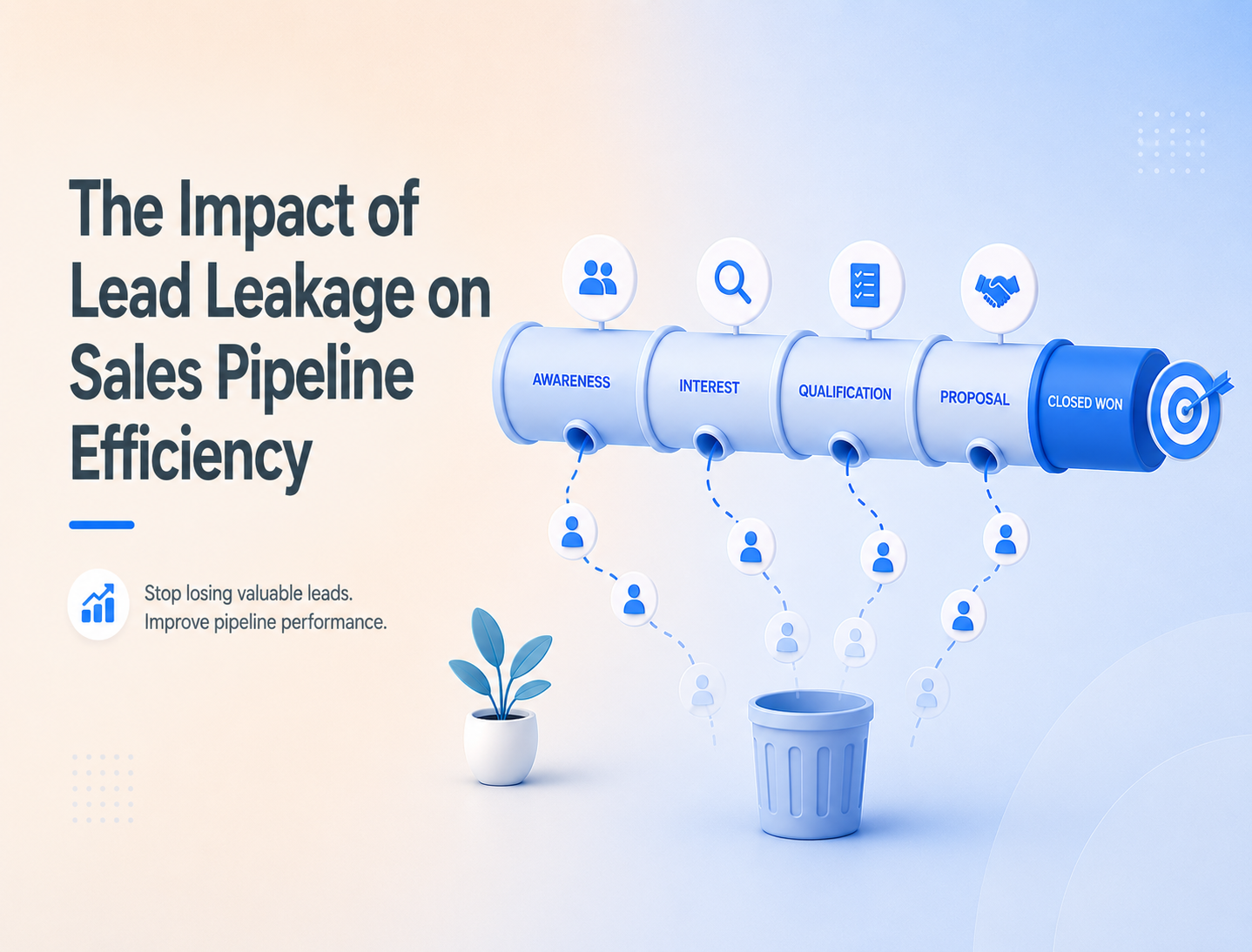
The Impact of Lead Leakage on Sales Pipeline Efficiency
Lead Management and Optimization


Lead scoring helps demand generation teams prioritize accounts, but it doesn’t create pipeline. Learn how top B2B marketers turn lead scores into qualified executive meetings that actually move revenue forward.
-
Demand Generation
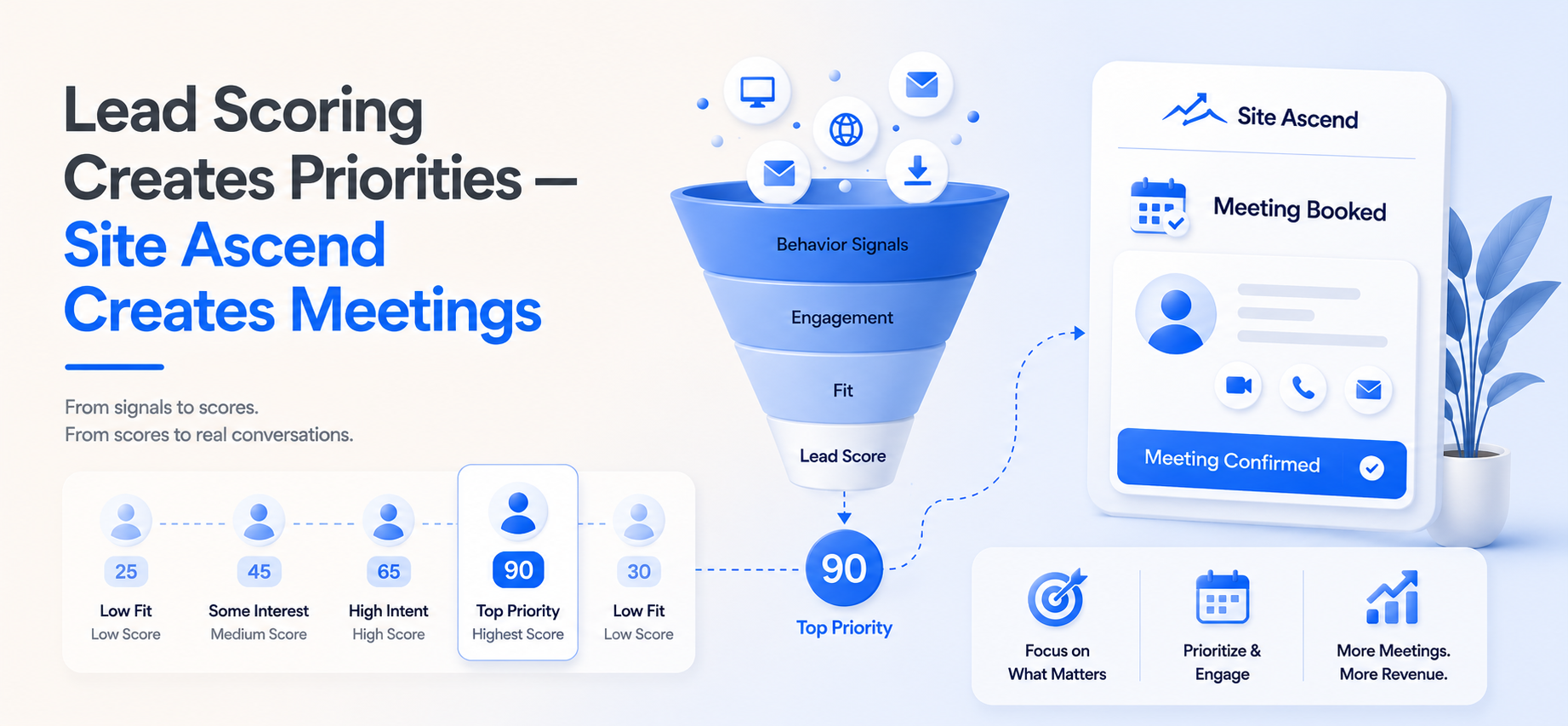
Introduction
Lead scoring is foundational to modern demand generation. It helps marketing teams prioritize accounts, align with sales, and focus resources on prospects that show buying signals. But in B2B technology, prioritization alone does not create pipeline.
High lead scores do not automatically translate into meaningful conversations with decision‑makers. And without those conversations, even the most sophisticated lead scoring models stall revenue impact.
This is where many demand generation teams hit a wall. Lead scoring creates priorities. Site Ascend creates meetings. The difference between the two is the difference between insight and execution.
What Lead Scoring Means for Demand Generation Marketers
Lead scoring is the process of ranking prospects based on engagement, intent signals, and fit. For demand generation leaders, it plays a critical role in:
For roles such as VP of Demand Generation, Director of Demand Generation, Revenue Marketing leaders, and Account-Based Marketing teams, lead scoring is a control mechanism. It creates order in a complex funnel.
However, lead scoring is inherently passive. It identifies who should be prioritized, but it does not validate interest, confirm authority, or secure time on a decision‑maker’s calendar. In high‑ACV, long‑cycle B2B environments, those gaps are costly.
Common Challenges Marketers Face
Even well‑designed lead scoring frameworks expose structural challenges.
Lead Scores Do Not Equal Sales Readiness
Engagement data and intent signals suggest interest, but they do not confirm buying timelines, decision authority, or internal alignment.
Sales Skepticism Toward MQLs
Sales teams often discount scored leads because too many lack real urgency or executive involvement.
Internal Bandwidth Constraints
Most marketing teams are not resourced to conduct consistent, high‑quality outbound qualification and meeting setting at scale.
Slow Movement From Interest to Conversation
Without a structured path from scoring to live dialogue, opportunities linger in the funnel and lose momentum.
These challenges are not failures of lead scoring. They are failures of execution beyond scoring.



.png)

%201.png)


.png)


Solutions That Work
This is where Site Ascend’s model directly complements lead scoring.
Lead Qualification That Confirms Intent
Site Ascend specializes in converting opt‑in and scored leads into qualified sales meetings by validating interest, authority, and readiness before sales engagement.
Instead of passing along every high‑scoring lead, Site Ascend ensures that only prospects who meet agreed‑upon qualification criteria move forward.
B2B Appointment Setting With Decision‑Makers
Site Ascend books 30‑minute virtual meetings exclusively with director‑level and above prospects at target accounts. These are not automated handoffs or calendar links. They are confirmed conversations with stakeholders who can influence buying decisions.
Marketing teams benefit by proving pipeline impact. Sales teams benefit by spending time only on meetings that occur and meet qualification standards.
This is how lead scoring becomes operational, not theoretical.
Actionable Steps for Demand Generation Leaders
To bridge the gap between prioritization and pipeline, demand generation teams should:
Comparison of Market Solutions
Most demand generation teams rely on one of two approaches after lead scoring.
Internal SDR‑Led Follow‑Up
Internal teams often struggle with scale, consistency, and executive‑level access. Meetings vary in quality, and marketing attribution is difficult to prove.
Traditional Outsourced Lead Services
Many providers focus on activity volume rather than qualification rigor. Meetings may occur, but often lack authority or alignment with sales expectations.
Site Ascend’s Model
Site Ascend is designed specifically for B2B technology marketers who need:
This model closes the gap between scoring and sales execution without adding internal overhead.
Conclusion
Lead scoring is essential. But it is not sufficient.
For demand generation leaders under pressure to prove pipeline contribution, the real differentiator is execution — validated interest, confirmed authority, and scheduled conversations with decision‑makers.
Lead scoring creates priorities. Site Ascend creates meetings.
If your team is ready to turn scored leads into qualified sales conversations, now is the time to pilot a model built for execution.
What is the limitation of lead scoring in B2B technology marketing?

How does Site Ascend support demand generation teams after lead scoring?
How is this different from internal SDR or outsourced models?


Start your pilot campaign today and explore the full range of Site Ascend's demand generation capabilities. Experience firsthand how we can enhance your efficiency, streamline your processes, and drive growth.
RELATED